
What is an Item Number or SKU Number?
What is an Item Number or SKU Number?

If you are a distributor, manufacturer, or even a service provider, you have probably heard of an “Item Number” and “SKU Number”. These unique identifiers play a crucial role in organizing products, tracking inventory, and streamlining business operations. But what exactly are they, and what types of items do they categorize? This blog will delve into the specifics of Item Numbers and SKU Numbers, explaining their significance and the various types of items they can classify. We will also highlight the importance of SKU and Item Numbers for distribution and manufacturing, and how Kechie Inventory Management Software can efficiently manage these for your business.
Item Number or SKU Number, what are they?
An Item Number, also known as a Stock Keeping Unit (SKU) Number, is a unique identifier assigned to each product in a retailer’s inventory. This alphanumeric code helps businesses track and manage their inventory efficiently. By using SKU Numbers, companies can quickly locate items, track stock levels, and streamline the reordering process.
The Importance of Item Numbers and SKU Numbers
- Inventory Management: Item Numbers help in maintaining accurate inventory levels, preventing overstocking or stockouts.
- Sales Tracking: SKUs allow businesses to monitor sales patterns and identify popular products.
- Efficiency: These identifiers enhance operational efficiency by simplifying the sorting and locating of products.
- Customer Experience: Accurate inventory management leads to better customer satisfaction by ensuring product availability.
Types of Items Classified by SKU Numbers
1. Consumer Goods
Consumer goods encompass a wide range of products, including electronics, clothing, food items, and household goods. Each item in this category has a unique SKU to distinguish it from similar products.
2. Raw Materials
Raw materials used in manufacturing are also assigned SKU Numbers. These can include metals, plastics, fabrics, and other essential materials needed for production.
3. Components and Parts
For businesses dealing with machinery, electronics, or vehicles, components and parts are crucial. Each part, no matter how small, is given an SKU to ensure accurate tracking and inventory management.
4. Finished Goods
Finished goods are products that have completed the manufacturing process and are ready for sale. These items, ranging from furniture to packaged food products, are identified with specific SKUs to streamline sales and inventory control.
5. Services
Although not physical items, services can also be assigned SKU Numbers. For example, in a spa or salon, different services like massages, haircuts, or manicures can have unique SKUs for efficient booking and sales tracking.
6. Digital Products
Digital products such as software, eBooks, and online courses also use SKUs for inventory and sales management. Each digital product is given a unique identifier to simplify the sales process and customer access.
7. Consumable Products
Consumable products, such as cleaning supplies, toiletries, and food and beverage items, are typically used up and replaced regularly. Assigning SKUs to these items helps in tracking usage rates, managing reordering processes, and ensuring consistent availability.
How to Create Effective SKU Numbers
Creating effective SKU Numbers involves a systematic approach to ensure each code is unique and easily identifiable. Here are some tips for creating SKUs:
- Consistency: Use a consistent format across all products.
- Simplicity: Keep SKUs simple and avoid overly complex codes.
- Relevance: Ensure the SKU includes relevant information, such as product type, size, and color.
- Uniqueness: Each SKU should be unique to avoid confusion and errors in inventory management.
Kechie Inventory Management Software
Kechie Inventory Management Software can streamline the creation and management of all SKUs and items. This powerful tool offers an intuitive interface for generating unique SKUs, tracking inventory levels, and managing product details. The addition of barcode capability further boosts efficiency and productivity, allowing for quick and accurate scanning of items reducing manual entry errors, and speeding up the inventory process. By Leveraging Kechie Inventory Management Software with barcode functionality, businesses can enhance their inventory control, improve overall efficiency, and free up valuable resources for other critical tasks.
Conclusion
Item Numbers and SKU Numbers are vital components of efficient inventory management and business operations. By understanding what they are and how to use them effectively, businesses can enhance their organizational processes, improve customer satisfaction, and streamline sales. Whether dealing with consumer goods, raw materials, consumable products, or digital products, assigning the right SKU to each item ensures accurate tracking and management.
Connect with us today, to learn more about how Kechie Solution has the tools for all your business needs. Let our expert team guide you through the process and help you discover the transformative potential of Kechie solutions.


My Office Apps Introduces Task Management within the Kechie Suite
My Office Apps Introduces Task Management within the Kechie Suite
IRVINE, Calif., Oct. 24, 2023 /PRNewswire/ -- My Office Apps, Inc. (MOA), an industry leader in business improvement software, announced a new Task Management Module within the Kechie Suite.
Today, we are thrilled to announce the launch of our Task Management module, an innovative task management software designed to revolutionize the way our clients, track, prioritize, and collaborate on their tasks. Kechie Task Management is set to transform the landscape of productivity, enabling users to achieve more in less time with enhanced efficiency and ease.
With its intuitive user interface and powerful features, Kechie Task Management simplifies task management like never before. Whether you are part of a small team or a large organization, Kechie Task Management empowers you to stay organized and in control of your workload. Key features include:
- Task Tracking and Prioritization: Create, assign, and prioritize tasks effortlessly. Stay on top of your to-do list and track progress with ease, ensuring nothing falls through the cracks.
- Collaboration and Communication: Foster seamless collaboration within teams. Share tasks, comments, and files in real time, enabling effective communication and eliminating miscommunication.
- Deadline Management: Set deadlines and reminders to ensure timely completion of tasks. Kechie Task Management's smart notifications keep you informed and focused on meeting critical deadlines.
- Fully Integrated: Kechie Task Management seamlessly integrates with the rest of the Kechie modules & processes, allowing you to centralize your task management and streamline your workflow.
"We are excited to unveil our Task Management module, a comprehensive task management solution built to empower our clients to achieve their goals efficiently," said Mariam Komeili, CEO of MOA. "We believe that by combining powerful features with an intuitive user experience, Kechie will redefine how people approach task management, driving productivity and success."
About My Office Apps, Inc.
My Office Apps, Inc. (MOA) is a leader in business improvement software solutions to automate your organization. Building on three decades of software design and development, MOA delivers Kechie™, a transformative business tool. Kechie is a fully integrated Enterprise Resource Planning Software as a Service (SaaS) platform with a simplified user experience and the latest cloud technology. Sold in separate packages – inventory and warehouse management (CRM, Sales, Procurement, Logistics included), manufacturing, finance – or a fully configured ERP system to have all of these individual tools. Kechie is easily configured to the scalable needs of your growing business. For more information on managing your business processes more efficiently and effectively, visit My Office Apps.
This article was published on Cision PR Newswire

My Office Apps Recognized for Advanced Technology
My Office Apps was Recognized for its Advanced Technology by Progress© at The 2023 OpenEdge World Tour event

Progress (Nasdaq: PRGS) has unveiled the winners of the 2023 OpenEdge North America Partner Awards, recognizing partners who have made a significant impact through their utilization of Progress® OpenEdge®. This leading application development platform is trusted by over 100,000 enterprises worldwide to streamline the delivery of vital business applications. The award recipients were announced this week as part of the OpenEdge World Tour event in Las Vegas, dedicated to OpenEdge customers and partners.
John Ainsworth, Executive Vice President and General Manager of Application and Data Platform at Progress, highlighted the pivotal role of partners in ensuring customer success, stating, “Each awardee this year has crafted applications that effectively address intricate business challenges, demonstrating the transformative capabilities of Progress technology.”
The OpenEdge North America Partner Awards honor partners who consistently go above and beyond, excelling in various categories and surpassing the expectations of the end-user community. Here are the distinguished winners of the 2023 OpenEdge North America Partner Awards:
Rising Star Award: My Office Apps The Rising Star Award recognizes the partner that is seeing success through its recent use of OpenEdge technology. They offer a high-quality business application that showcases the future of innovation in their industry. Meals on Wheels San Francisco chose My Office Apps’ fully integrated, cloud-based and OpenEdge-powered ERP system, Kechie, to transform its warehouse and inventory management — enabling it to reach its goal of delivering up to 30,000 meals a day and more than two million meals a year.
Read more about the Rising Star Award...

Integrations between Kechie and QuickBooks Online
My Office Apps Introduces Its Unique Two-way Integrations between Kechie™ and QuickBooks Online
IRVINE, Calif., April 18, 2023 /PRNewswire/ -- My Office Apps, Inc. (MOA), an industry leader in business improvement software, announced it now provides an integration with QuickBooks Online.
Our unique integration is a two-way sync between Kechie and QuickBooks online. Unlike other Inventory Management or ERP software solutions, that offer a one-way integration, Kechie has a two-way sync, meaning the data flows back and forth between the two systems seamlessly. As information is updated in Kechie it will automatically update QuickBooks Online and all relevant updates in QuickBooks Online will be synced to Kechie. Kechie also offers real-time inventory management with audit traceability to track all your transactions and sync the data into QuickBooks to help with your financial management.
The integration enables businesses to create and sync the following processes:
Vendors- Vendors created in Kechie or QuickBooks Online will automatically pass through to the other system.
Purchase Orders- Creating a PO in either system will auto-populate in the other system to maintain the synchronization of data. Once PO is received, the information is sent to QuickBooks Online to be paid.
Customers- Customers created in Kechie or QuickBooks Online will automatically update both systems. Kechie provides additional features and offers a complete CRM to help your sales department manage all their customers and pipelines.
Sales Order- Create Sales Order & Quotation in Kechie and once shipped the invoice is generated in Kechie and automatically sent to QuickBooks to create the invoice in QuickBooks Online, enabling the systems to work together more effectively. Kechie provides many reports to keep track and analyze of all your sales data.
Inventory- All detailed location information including bin and multi-warehouse locations will be maintained in Kechie, since QuickBooks Online does not offer these capabilities. Kechie has full inventory management functionality and upon any updates, the information will be synced with QuickBooks Online in real-time. Up-to-date inventory visibility is available at an instant via either system.
Items- Creating items in Kechie or QuickBooks Online allows data to be exchanged between both systems. Kechie will offer additional options for item attributes, categories, product types, and more, to help with detailed reporting.
Mariam Komeili, MOA co-founder and CEO, commented, "Some clients would like to do their accounting in QuickBooks Online, but need that advanced inventory management or ERP capability to run their business. Creating this integration will provide peace of mind for clients and still give them the advanced features to manage their inventory or even do manufacturing, while still utilizing QuickBooks Online."
About My Office Apps, Inc.
My Office Apps, Inc. (MOA) is a leader in business improvement software solutions to automate your organization. Building on three decades of software design and development, MOA delivers Kechie™, a transformative business tool. Kechie is a fully integrated Enterprise Resource Planning Software as a Service (SaaS) platform with a simplified user experience and the latest cloud technology. Sold in separate packages – inventory and warehouse management (CRM, Sales, Procurement, Logistics included), manufacturing, finance – or a fully configured ERP system to have all of these individual tools. Kechie is easily configured to the scalable needs of your growing business. For more information on managing your business processes more efficiently and effectively, visit My Office Apps.
This article was published on Cision PR Newswire

Revenue Recognition Functionality
My Office Apps Introduces New Revenue Recognition Functionality in the Finance Module of its Kechie™ ERP Software
IRVINE, Calif., March 28, 2023 /PRNewswire/ -- My Office Apps, Inc. (MOA), an industry leader in business improvement software, announced it is now including an automated revenue recognition functionality in the finance module of its cloud-based Kechie™ Enterprise Resource Planning (ERP) software as a new feature.
The revenue recognition capability in Kechie will now make it much easier for customers to stay compliant with the Financial Accounting Standards Board ASC 606 specification, Revenue from Contracts with Customers. Revenue recognition is an accounting principle that requires a company to only record revenue when it has been earned, not when the related cash is collected. It is often needed when a customer provides an up-front payment for a service to be delivered later or for certain transactions where the product or service is delivered in parts over an extended period. The new Kechie feature offers automated revenue recognition capability and eliminates much of the tedious manual work needed to make account adjustments periodically to keep a company's books up-to-date. Once a customer contract is set up in Kechie, the system will implement the necessary periodic accounting adjustments automatically, based on the length of the contact and how often the services are satisfied for recognition. The implementation is flexible for different periods to be setup, so if one wants to do this monthly instead of a quarterly basis, options are available.
Read more about New Revenue Recognition Functionality

New and Improved B2B Customer Portal
My Office Apps Introduces the New and Improved B2B Customer Portal
My Office Apps, Inc. (MOA), an industry leader in business improvement software and the provider of Kechie software, announced the launch of the new and improved B2B Customer Portal, as a part of the fully integrated solution with the Kechie suite of products.
The new B2B Customer Portal is designed to offer your business clients an easy way to place orders. Your clients can log into the Customer Portal, view available products and inventory levels, create and manage orders, pay, and track orders. The orders are then available in real-time in Kechie and ready to be shipped. Once shipped, your client can view shipping details and tracking information.
Read more about the My Office Apps New and Improved B2B Customer Portal.


Benefits of Using an ERP Software For Manufacturing
Benefits of using an ERP Software For Manufacturing
Making the decision to invest in a new ERP system is no small task. It is important to consider all of the factors that will go into making this decision, such as scalability, maturity, and the ability to handle complex supply chain functions and shop floor automation. ERP implementation can be tedious, time-consuming, and expensive.
By choosing a new ERP platform, a manufacturing company is investing in a product with a long lifecycle that will impact their business for many years to come.
It is imperative that owners and decision-makers tasked with the decision of purchasing a new ERP do so with a balance of cost, ease of use, lifecycle changes, and especially, the unique needs of their company within their industry.
Competitive Edge
In order to maintain a competitive edge in the manufacturing industry, it is important to have the right software in place. Many manufacturing companies are turning to ERP software to help them manage their business more efficiently.
Manufacturing ERP software can automate tasks and help you make better decisions about your manufacturing process. In this blog post, we will discuss the benefits of ERP software for manufacturers and how they can help you streamline your business!

In some instances when a company is in its early stages of growth, it often experiences rapid expansion in product offerings and manufacturing volume.
This can lead to the fragmentation of data where different software systems are used by different departments to control operations.
As the company scales, these problems can become increasingly difficult to manage and can even cause production processes to become disorganized and out of control.
Kechie ERP
To avoid the many struggles that come with both growth and unsatisfactory ERP systems for Manufacturing, many companies are turning to Kechie ERP for manufacturing software.
With Kechie, My Office Apps offers a robust, right-sized ERP software for Manufacturing that can handle the needs of any business - small or large. With our My Office Apps integration, you'll have everything you need to run your business at your fingertips.
Some of the features that work in particular for Manufacturing:
- CRM
- Logistics
- Procurement
- Multi-Location Management
- Complete Inventory Management
- Supply Chain Management
- Customer Support Order Management
- Production
Kechie features hundreds of reports and thousands of configurations designed to provide the most accurate information in real-time. Every configuration can be saved for future use. All reports come standard out-of-the-box with no limits on how many reports users can generate.
Contact us today to schedule a demo and see what Kechie and My Office Apps can do for you and your business.


5 Good Reasons To Use Automated Order Management Software
5 Good Reasons To Use Automated Order Management Software
Automated Order Management Software
Modern warehouses and wholesale distributors have begun to adapt to the cloud revolution. They are making their way to cloud-based, fully integrated solutions. With the fluctuating restrictions imposed due to the COVID pandemic, cloud-based software has become a necessity. Order management software can help any business, but order management software should do more for your company than organize sales orders and sales information.
The right software can make all the difference when running a business. It's an essential part of being able to provide goods and services on a timely basis. Companies can prevent price increases and variations in their profit margins. Having this complex information is of little use when your software doesn't think for itself. Who has time to research and monitor every single order? How do you know who purchased what? How do you know when it is time to fill orders? If you answered none of these questions or took longer to answer them, why not automate them? You see benefits such as:

1. More Effective Sales Teams
Sourcing data is one thing; storing that data is another. Warehouse and order automation offers tremendous potential for companies. Still, you'll just be wasting time implementing an order management system that doesn't provide your sales reps the data they need without the proper infrastructure. An adequate order management system should monitor and track the input of a sales order, critical customer, and shipping information. Knowledge is empowering, and an empowered sales staff is more productive than spending time collecting basic information.
2. Reduce Time Spent on Customer Service
The faster you can resolve problems, the fewer steps it will take you to complete your day-to-day tasks. With customer service procedures such as RMAs (return merchandise authorizations) being automated, it can make managing your busy schedule more manageable. Automating mundane or repetitive tasks such as tracking lot numbers, serial numbers, and warranties can speed up the efficacy of customer service. Automated order management software is not a tool used by your company but instead an extension of your departments to increase productivity while removing unnecessary processes simultaneously.
3. Reduce Opportunities for Errors
The amount of effort every employee puts into ensuring accuracy has shown to increase productivity. Still, in a business world replacing humans with AI-powered software, accuracy and speed are no longer exclusive but are necessities. Automated data entry systems have proven to increase warehouse productivity. But they can also cause significant errors—for instance, mistakenly shipping products to customers who don't need them. Recent reports show that over 50% of data feed errors are due to human error. A sound order management system will check these mistakes constantly, notifying managers and other workers of any problems.
 4. Reduce Manual Entries
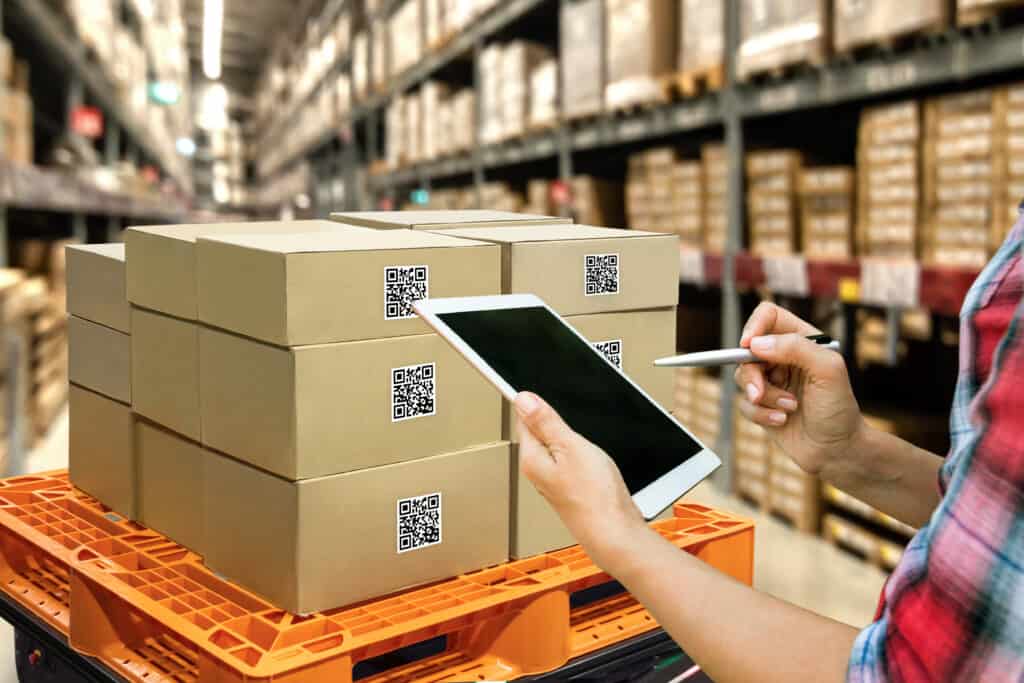
Manual data entry is time-consuming and error-prone, but these common problems can be solved using the latest organizational technology. Implementing these advanced technologies, such as barcodes or QR codes, is not the headache it used to be. In the olden days, manual data entry meant punching holes in sheets of paper, scanning and entering document info, and endless spreadsheets. Today automated order management systems can do tedious jobs much more efficiently and accurately. Integrating these technologies is no longer a labor-intensive exercise. Having organized warehouses, racks, and bins can improve sales order fulfillment times and customer service satisfaction rates. With an organized warehouse that integrates with an order management solution, the time spent manually inputting data has been either significantly reduced or eliminated.
5. Gain Insight Into Company Performance
Gaining visibility into your organization's performance is crucial, tracking purchases and costs, managing inventory, and reporting earnings, just to name a few. There's no better way to do this than through data. Order management systems are sitting on treasure troves of customer and sales data. Your ability to interpret that data is only as good as your reporting tools. Businesses with an order management system that can quickly monitor, track, and display critical data can provide managers with the necessary insights to make informed business decisions.
Kechie's Robust Solution
When it comes to AI-powered order management systems, Kechie is truly the next generation. The fully integrated order management system is a genuine business improvement solution. Kechie can handle all incoming sales orders, help organize inventory, and update accounting and financial departments in real-time. Kechie accomplishes this by living on the cloud, utilizing proprietary software to ensure accuracy and speed no matter who is using it.
Contact the experts at My Office Apps today to schedule a demo and see what our order management system can do for you.

Medical Inventory Management & Consumable Inventory
Consumable Inventory & the Medical Field
Despite the medical industry operating as a regular for-profit business, they rarely work as such. Medical professionals are bound by their oaths to help their patients no matter what. This focus on patient care pulls them away from managing their business like a businessperson. Unorganized medical inventory management can cause delays in providing patient care, and in the healthcare industry, each second matters. Medical providers often overlook inventory management, especially consumable inventory. Changing regulations, patient relations, labor shortages, and fluctuating supply costs understandably take precedent. A medical inventory management system can be intimidating and overwhelming to the average doctor, nurse, or other medical professionals. After all, configuring and monitoring an advanced business management system is not what they're trained to do.
There is a persistent notion that business owners of all kinds are saving time and money by not learning new software. They have convinced themselves that the time necessary and commitment to learning a medical or hospital inventory management system will derail patient care and take attention away from other operational concerns. This thinking causes difficulties in increasing the number of inventory items proportionately.
What's more, the type of inventory a medical business or hospital has is far from the standard business model. Medical service businesses have stock tightly regulated by many government agencies, on top of perishable, condition-specific, and consumable inventory that all require special consideration. The need for inventory management software is not something that can be ignored forever. Eventually, it will be too much to track.
Medical Inventory Management & Consumable Inventory
Medical inventory management software (IMS) needs a higher level of functionality to help manage the different kinds of inventory. The most sophisticated IMS has "consumable inventory" as a feature. This feature is vital because consumable inventory is a special kind of inventory, how it is used, and how it affects a business.
What is consumable medical inventory? According to Clinicaloncology.com "Consumables include gloves, gowns, masks, syringes, needles, sutures, staples, IV tubing, catheters, and adhesives for wound dressing, in addition to other tools needed by doctors and nurses to provide care." Consumable inventory's unique nature is that there is no reusing it once used or consumed. One and done, as some would say. That is the critical difference between consumable inventory and all other forms of inventory.
Because of the temporary nature of consumable inventory, it can become a large portion of the overall budget. Not just in the amount purchased, but the operational costs associated with consuming a said item. Thanks to the COVID pandemic, new requirements for personal protective equipment have made consumable inventory an even more significant chunk of the operations budget.

Getting a Handle on Consumable Inventory
Understanding and controlling consumable inventory offers a host of benefits:
- Companies can see what items get used the most, when and how it is used, and who uses it by tracking usage rates and trends.
- By monitoring both high and low inventory levels, companies can make informed purchase decisions.
- With a firm understanding of the supply chain, purchases and deliveries become quickly automated.
- Aids in financial management as consumable inventory can be a considerable drain on revenue streams.
Ultimately medical inventory management software is required to tame the beast of consumable inventory. The amount of variables, items, and consistent calculations is too much for pad and pen. The selection process is often overwhelming with a litany of inventory management, supply chain management, warehouse management, and enterprise resource planning (ERP) software out there. Knowing what to look for in software and selecting becomes easier when you understand what to identify.
Medical Inventory Management vs. Enterprise Resource Planning System
Your medical inventory management software should do more for your business than provide inventory levels. Often inventory management systems are just that, used for managing inventory. Other software incorporates inventory management into their overall functionality, known as enterprise resource planning (ERP) systems. Medical ERP systems operate the same way typical ERP systems do with increased functionality to meet the medical industry's demands.
Medical ERP systems can communicate with other modules that oversee accounting, finance, procurement, and other parts of the business to help provide critical data necessary to get a complete understanding of the state of the company. The network of modules communicating with one another is what we call a fully integrated ERP system capable of managing all business operations. Be warned. Many ERP systems cannot distinguish, let alone count, consumable inventory separately from regular stock. Having a robust inventory management module within an ERP system empowers medical business owners to spend less time gathering data and more time helping their patients.
Automation and Reporting
Other significant features to look for in a system are automation and reporting tools. Automation will enable businesses to have repetitive and mundane tasks such as placing monthly purchase orders, notifying patients of upcoming appointments, and receiving scheduled deliveries. Reports generate data, data is king in the business world, and the medical industry is no different. In this case, less about getting ahead of the competition and more about understanding how the business operates. As any hospital administrator will tell you, knowing how money flows within a facility is just as crucial as obtaining the funds.

The Kechie Difference
Medical inventory management systems are suitable for small businesses with no expansion plans. But, a fully integrated ERP system is the best answer for businesses that need advanced solutions. My Office Apps are the creators of Kechie ERP, a cloud-based, fully integrated solution configurable to the medical industry's needs.
The features discussed above are all present in Kechie out of the box, allowing medical businesses to:
- Monitor and control all inventory types, with advanced consumption functionality
- Streamline their supply chain
- Automate tasks
- Provide comprehensive reports from the hundreds available
- Improve overall efficiency and quality of the business operations
My Office Apps is a company of dedicated professionals who use their expertise to make the process of implementing an ERP as painless and straightforward as possible. Contact us today to learn more about My Office Apps solutions for the medical industry, or schedule a demo to see first-hand what we can do for you and your business.

How to Improve Inventory Management in Shopify
Why Your Shopify Store Needs an Inventory Management Solution
The COVID Pandemic and eCommerce Growth
2020 was many things, not the least of which the United Nations Conference on Trade and Development called a "turning point" in eCommerce. Across the world, the effects of the eCommerce boom were felt. In the United States, we saw an eCommerce growth rate of a staggering 44% increase from 2019. This growth generated approximately $861.12 billion in online sales. For businesses equipped to handle a large sales influx, there was nothing to be concerned over. Still, for companies working with a patchwork of software or working exclusively with the tools provided by their platform, such as Shopify Inventory, the results can be less advantageous. Experts agree that proper inventory management systems are a critical factor for eCommerce businesses to be successful.
What is an Inventory Management System?
An inventory management system (IMS) is a piece of software that can provide for your company's technological needs while managing all aspects of your inventory. When selecting an inventory management system, growing eCommerce businesses need only ask themselves a few essential questions:
- Scalability: Is the software capable of growing with your store?
- Ease of use: Do you understand all the functions of your inventory management system?
- Reliability: Can you access the system in a way that makes sense to you?
- Technology: Is the system capable of handling the tasks you need it to? Such as reporting, dynamically updated data, and more.

The Dangers of Not Using an IMS
For the many businesses that have found success on Shopify, the need for inventory management grows as their business does. It's easy to see a dropshipping site as easy to manage, but managing inventory can be tricky. If your Shopify store is growing too fast, then monitoring inventory levels, tracking sales, managing vendors, and other tasks will become overwhelming. There is a constant threat of mistakes and errors when not tracking inventory properly. However, an IMS has many significant benefits:
- An IMS can plan and prepare for sudden sales spikes or drops by monitoring trends and referring to historical records.
- Provide increased sales productivity and improve delivery times, allowing your business to give customers a more accurate picture of their deliveries.
- By streamlining operations, you can focus on the more critical functions within the business.
Why Shopify Inventory Management Won't Be Enough
Two factors of an inventory management system can cause significant headaches for eCommerce owners. While it is a top-notch eCommerce platform, Shopify won't
- Automate your ordering and shipping processes
- Help to manage your product variants
Shopify can help with basic eCommerce needs but ultimately relies on third-party developers to offer unique solutions for their users.
For example, business owners should also consider accounting software and Customer Relationship Management (CRM) software to care for and cater to their customers adequately. Shopify does not provide these out of the box. Instead, they have a marketplace with applications and extensions designed to add increased functionality to the platform. This lack of out-of-the-box functionality presents unique challenges for owners who need multiple applications. As you add more applications to manage multiple locations, handle return merchandise authorizations (RMA), and generate financial management reports, the more challenging it becomes. By integrating, synchronizing, and consistently updating an unruly list of software and extensions, you are almost certainly setting yourself up for hardship, if not failure.

What Can Be Done?
Ideally, you would look for an all-in-one solution to help automate the inventory management system, compile various essential reports and improve your business operations overall. While still seamlessly connecting to your Shopify store.
The team at My Office Apps has developed a fully integrated, cloud-based ERP system for Shopify users built to handle all data in real time. The Kechie system is fully integrated with your Shopify store. This allows store owners to take orders from Shopify and update their Kechie system. Any changes made to Kechie will dynamically update the Shopify store. This ensures that Shopify owners are never working with incorrect data.
Additionally, Kechie ERP is an entirely scalable solution, meaning that as the shop grows, so does Kechie. My Office Apps understand that businesses need room to grow, so they've designed Kechie to allow for unlimited transactions of all kinds. Best of all, Kechie is cloud-based, users can access their database from any web browser, a perfect companion for Shopify's Mobile Shop Application. Kechie is more than just an inventory management system; it is a complete business improvement solution.
Contact us today to schedule a demo and see what Kechie ERP can do for your business.