Top 12 Cloud-Based ERP Systems for Distribution
This guide breaks down the top 12 cloud-based ERP systems specifically suited for distribution, wholesale, and inventory-driven businesses, with a focus on inventory depth, operational efficiency, and long-term scalability.
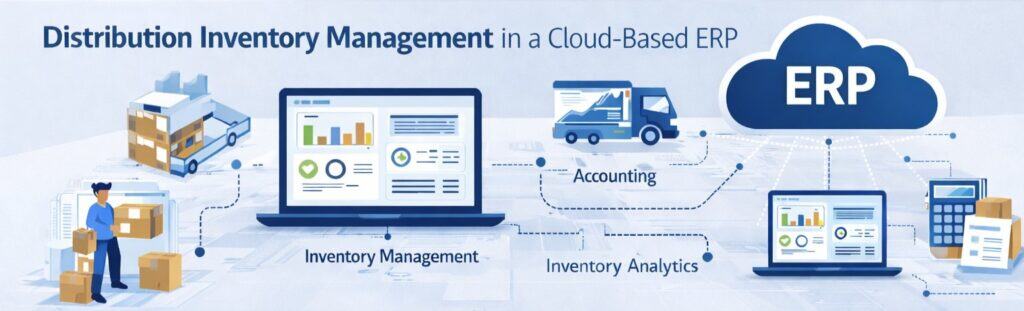
Why Distribution Businesses Need a Cloud-Based ERP
Distribution companies face unique challenges, including:
- High-volume inventory management
- FIFO and lot-tracked inventory
- Multi-warehouse visibility
- Complex purchasing and vendor relationships
- Tight coordination between inventory, sales, and accounting
Compared to legacy systems, a cloud ERP vs on-premise ERP solution offers real-time access, lower IT costs, automatic updates, and faster growth. These are key wins for growing distributors.
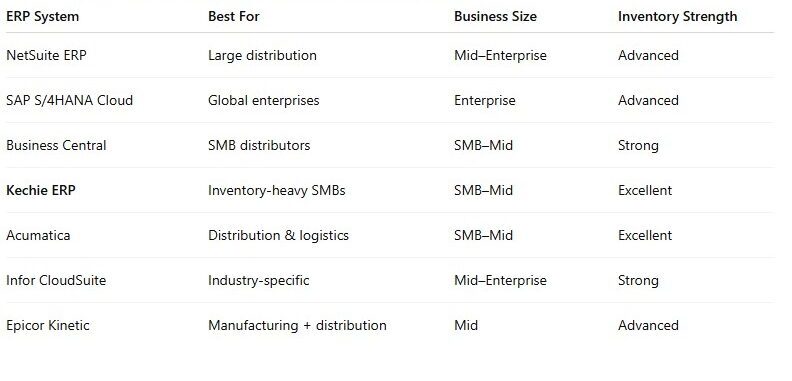
Quick Comparison: Best Cloud ERP for Distribution
Top 12 Cloud-Based ERP Systems for Distribution
1. NetSuite ERP (Oracle NetSuite)
Best for: Large-scale distribution operations
Strengths for distribution:
- Multi-warehouse inventory management
- Advanced demand planning and procurement
- Strong financial controls and compliance
Best fit & things to know:
Best for larger distributors with complex structures and the resources for a longer rollout.
2. SAP S/4HANA Cloud
Best for: Enterprise distribution networks
Strengths for distribution:
- End-to-end supply chain visibility
- High-volume transaction processing
- Advanced analytics and forecasting
Best fit & things to know:
Designed primarily for enterprise-scale operations and global supply chains.
3. Microsoft Dynamics 365 Business Central
Best for: Growing SMB distributors
Strengths for distribution:
- Inventory and warehouse management
- Tight integration with Excel, Power BI, and Outlook
- Flexible ecosystem of industry extensions
Best fit & things to know:
A strong choice for SMB distributors. Add-ons are available for more complex workflows.
4. Kechie ERP
Best for: Inventory-heavy distributors seeking flexibility
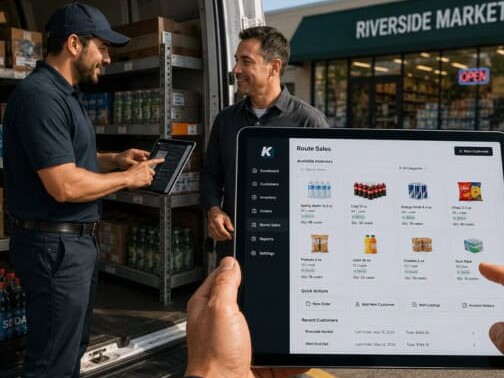
Kechie is a cloud-based ERP built specifically for inventory-driven businesses and is designed for distributors and wholesalers that have outgrown basic accounting software.
Strengths for distribution:
- Advanced inventory control including FIFO, lot tracking, and serialization
- Purchasing, sales orders, fulfillment, and accounting in one system
- Built-in CRM fully connected to inventory and financials
- Real-time dashboards for inventory levels and margins
Best fit & things to know:
Ideal for growing distributors and wholesalers that need strong inventory control without enterprise complexity.
5. Acumatica Cloud ERP
Best for: Distribution businesses seeking scalable pricing
Strengths for distribution:
- Robust inventory and order management
- Flexible warehouse and logistics capabilities
- Resource-based pricing model
Best fit & things to know:
Popular among distributors looking for scalability without per-user licensing constraints.
6. Infor CloudSuite Distribution
Best for: Industry-specific distribution workflows
Strengths for distribution:
- Industry-focused process design
- AI-driven demand insights
- Strong supply chain planning tools
Best fit & things to know:
A good option for distributors seeking industry-specific ERP workflows.
7. Epicor Kinetic (Cloud)
Best for: Distributors with light manufacturing or kitting
Strengths for distribution:
- Inventory and production alignment
- Strong demand planning and scheduling
- Cloud and hybrid deployment options
Best fit & things to know:
Well suited for businesses combining distribution with light manufacturing or assembly.
8. Odoo Enterprise
Best for: Modular ERP adoption
Strengths for distribution:
- Inventory, purchasing, and sales modules
- Cost-effective and modular design
- Open-source flexibility
Best fit & things to know:
Attractive for distributors that want modular control and have technical resources available.
9. Syspro Cloud ERP
Best for: Mid-sized distributors
Strengths for distribution:
- Strong inventory costing and traceability
- Warehouse management tools
- Distribution-focused reporting
Best fit & things to know:
A solid option for mid-sized distribution businesses prioritizing inventory accuracy.
10. Priority ERP
Best for: International distribution businesses
Strengths for distribution:
- Multi-entity and multi-currency support
- Customizable workflows
- Global compliance capabilities
Best fit & things to know:
Often selected by distributors operating across multiple regions.
11. Zoho Inventory + Finance Stack
Best for: Small distributors with simpler operations
Strengths for distribution:
- Affordable and easy to use
- Integrated sales and inventory tools
Best fit & things to know:
Works well for smaller teams and less complex inventory environments.
12. Workday Financial Management
Best for: Financial-centric enterprises
Strengths:
- Advanced financial planning and analytics
Best fit & things to know:
Primarily focused on finance and HR rather than inventory-heavy distribution operations.
How to Choose the Right Cloud ERP for Distribution
When evaluating ERP systems for distribution businesses, prioritize:
- Real-time inventory visibility
- Multi-warehouse management
- Tight integration between inventory, purchasing, sales, and accounting
- Scalability without heavy customization
Many wholesale and distribution companies find that mid-market ERPs offer the best balance between functionality and cost.
Cloud ERP Trends for Inventory-Heavy Businesses in 2026
- AI-driven demand forecasting
- ERP and CRM convergence
- Configuration over customization
- Real-time inventory and margin analytics
Final Thoughts
The best cloud-based ERP for distribution is not the most complex system—it’s the one that provides clarity, control, and scalability without slowing operations down.
As inventory volumes grow and customer expectations rise, investing in the right ERP for inventory management becomes a competitive advantage and a foundation for long-term growth.
Frequently Asked Questions
What is the best cloud-based ERP for distribution businesses?
The best cloud ERP for distribution depends on your inventory, number of warehouses, and growth plans. Kechie, Acumatica, and Business Central are popular with inventory-heavy distributors. They balance strong features with ease of use.
Is cloud ERP suitable for inventory-heavy operations?
Yes. Modern cloud ERP supports FIFO inventory, lot tracking, serial numbers, and multiple warehouses. That makes it ideal for distributors and wholesalers.
How much does a cloud-based ERP system cost?
Cloud ERP pricing varies based on features, users, and business size. SMB-focused platforms typically offer more predictable pricing than enterprise solutions.
What are the benefits of cloud ERP over on-premise ERP?
Cloud ERP gives you real-time access, lower IT costs, automatic updates, and faster growth than on-premise systems.
Schedule a Free Demo Today!
See how Kechie ERP can help your business and save you time, money, and hassle. Click the button below to schedule your free demo.
Schedule Your Kechie Demo Now!