Why Manufacturers and Distributors Look Beyond NetSuite
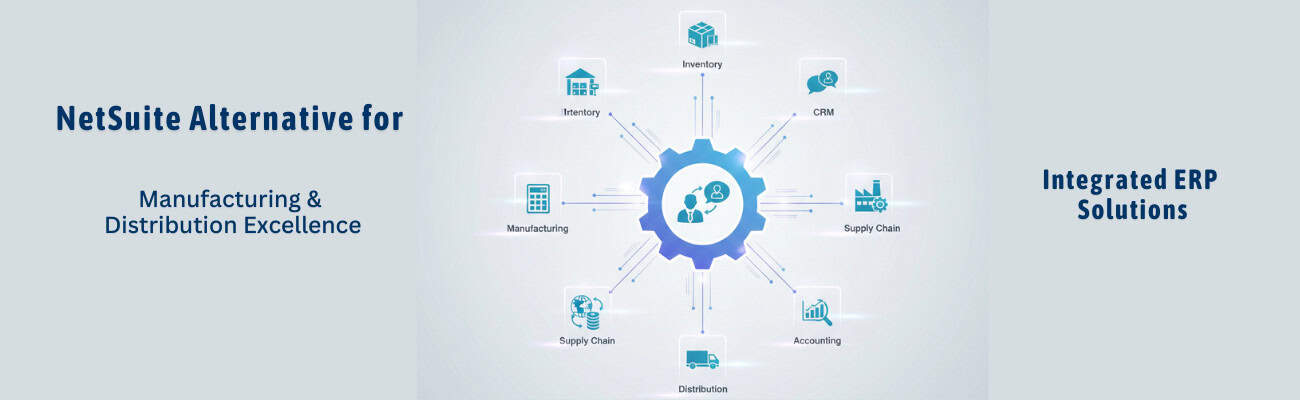
If you are evaluating NetSuite for your manufacturing or distribution business, you are likely looking for a scalable cloud ERP platform that can handle operational complexity.
But many growing companies discover that while NetSuite is broad in scope, it is not always the best operational fit for inventory-intensive environments.
Kechie ERP is a purpose-built NetSuite alternative designed specifically for manufacturers and distribution companies that need real-time inventory visibility, advanced production control, multi-warehouse management, and integrated financial reporting, without extended implementation timelines or layered add-ons.
Why Companies Search for a NetSuite Alternative
NetSuite is often treated as the default mid-market ERP option. It appears in nearly every analyst list and vendor comparison.
But once operations leaders begin reviewing real workflows, concerns surface.
- Manufacturers question whether production planning depth requires additional modules.
- Distributors evaluate how multi-warehouse visibility functions in practice.
- Finance teams assess how reporting ties directly to operational transactions.
- Leadership evaluates total cost of ownership over five to ten years.
At this stage, the conversation shifts from capability to alignment.
Companies begin searching for a NetSuite alternative because they want:
• Stronger operational depth in manufacturing
• Clear multi-warehouse inventory visibility
• Predictable cost structure
• Structured implementation
• Reduced dependency on third-party customization
This is where a platform built around operational flow becomes important.
Operational Architecture: Finance-First vs Inventory-First ERP
Many ERP systems, including NetSuite, were originally structured around financial management and later expanded into operational modules.
Kechie was built differently.
Inventory and warehouse management form the core architecture. Manufacturing, procurement, logistics, and financial controls were developed around how materials actually move through a business.
That architectural difference affects daily operations.
- When inventory moves between warehouses, financial reporting updates instantly.
- When production demand increases, MRP adjusts procurement.
- When returns are processed, inventory and accounting remain aligned automatically.
There is no need for reconciliation between systems. Data flows in real time.
For inventory-intensive organizations, this cohesion reduces friction and improves decision speed.
NetSuite Alternative for Distribution Companies
Distribution companies operate in high-volume, high-velocity environments. Inventory accuracy directly affects fulfillment speed and customer retention. Procurement timing affects carrying costs. Warehouse coordination determines profitability.
Organizations evaluating NetSuite for distribution often encounter practical concerns:
• Complex configuration required for multi-location inventory
• Add-on modules for advanced warehouse workflows
• Licensing growth as user count expands
• Limited native transparency across distributed facilities
Kechie addresses these realities directly.
1. Multi-Warehouse Inventory Control
Kechie provides real-time visibility across multiple warehouses, locations, and bins. Distribution leaders can monitor inventory movement, transfer stock between facilities, and prevent imbalances without exporting data.

2. Demand-Driven Procurement
Procurement automation aligns directly with reorder points, sales velocity, and demand signals. Buyers operate from live operational data rather than static reports.
3. Vendor-Managed Inventory
Vendor-managed inventory processes are integrated into the system. Suppliers can manage quantity and frequency of orders within structured controls, reducing internal administrative burden.
4. Returns and RMA Integration
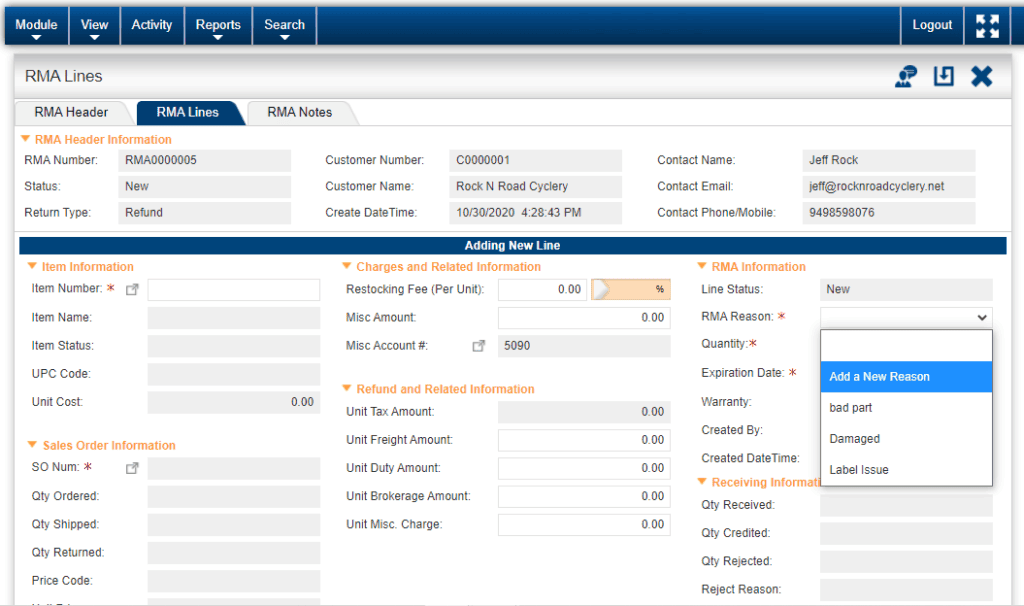
Returns, replacements, and repair workflows integrate seamlessly with inventory and financial records. This reduces manual correction and preserves reporting accuracy.
For companies searching for an ERP alternative to NetSuite for distribution, clarity and operational control often outweigh platform scale.
NetSuite Alternative for Manufacturing Companies
Manufacturers require ERP systems that handle production complexity without excessive customization.
NetSuite can support manufacturing, but many companies discover that advanced capabilities require configuration layers or additional modules.
Kechie includes robust manufacturing functionality within the core platform.
1. Advanced Bill of Material Management
Multi-level BOM structures allow manufacturers to manage complex assemblies, subassemblies, and raw materials within a unified system.
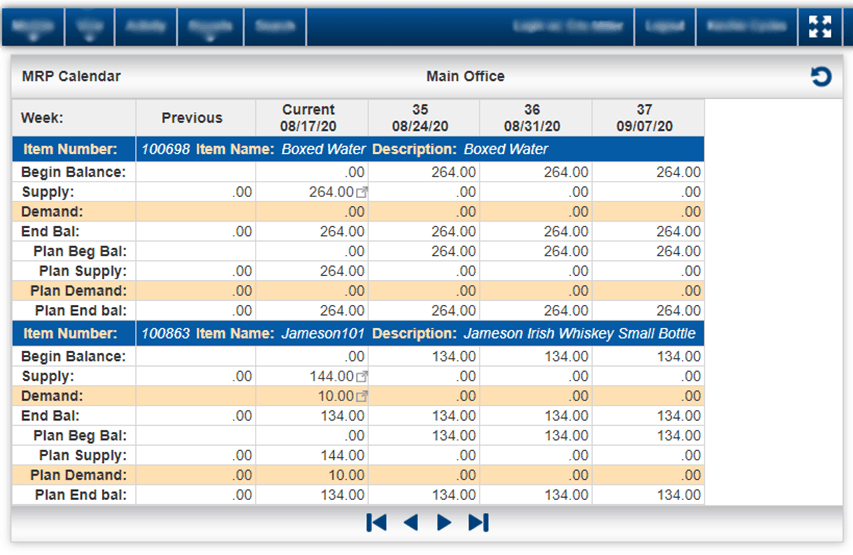
2. Automated MRP
Material Requirements Planning aligns production schedules with inventory levels and procurement timelines. Supply and demand remain balanced without spreadsheet-driven planning.
3. Work Center Scheduling
Production managers gain visibility into work center capacity, labor allocation, and production timelines.
4. Job Cost Tracking
Labor, material, and overhead costs are tracked at the job level. Margin visibility is immediate, not delayed until month-end reconciliation.
5. Internal and Third-Party Production
Kechie supports internal jobs and external manufacturing workflows, providing a comprehensive view of production across facilities and partners.
For manufacturers searching for a practical NetSuite competitor, depth without unnecessary customization is often the priority.
ERP Implementation Without Extended Disruption
ERP transitions can become operationally disruptive if poorly managed.
NetSuite implementations frequently involve extended timelines, layered consulting engagements, and ongoing configuration adjustments.
Kechie emphasizes structured deployment and operational continuity.
Implementation includes:
• Clear data migration planning
• Phased rollout options by warehouse or department
• Role-based training tailored to operational responsibilities
• Defined project milestones
• Hands-on go-live support
The objective is to modernize infrastructure without interrupting production schedules or fulfillment operations.
For Directors of Operations and CFOs concerned about downtime risk, this disciplined approach reduces uncertainty.
Cost Structure and Long-Term Scalability
Total cost of ownership is often underestimated in ERP evaluations.
With large platforms, licensing tiers, add-on modules, and consulting support can expand over time as complexity increases.
Kechie offers transparent packaging aligned with operational scope. As companies expand warehouses, increase transaction volume, or enter new markets, the platform scales without forcing system redesign.
For organizations planning sustained growth, scalability must include cost predictability.
NetSuite vs Kechie: Strategic Comparison
When evaluating NetSuite vs Kechie, the distinction often centers on operational orientation.
| NetSuite: | Broad, cross-industry platform with extensive financial roots. |
| Kechie: | Operationally focused ERP built around inventory-intensive and manufacturing-driven environments. |
If your organization depends heavily on warehouse efficiency, demand planning accuracy, production scheduling, and cross-department visibility, architecture influences performance.
ERP should enhance operational clarity, not add complexity.
Frequently Asked Questions About NetSuite Alternatives
Is Kechie a direct NetSuite competitor?
Yes. Kechie competes directly in the mid-market ERP space for manufacturing and distribution companies seeking cloud-based ERP alternatives.
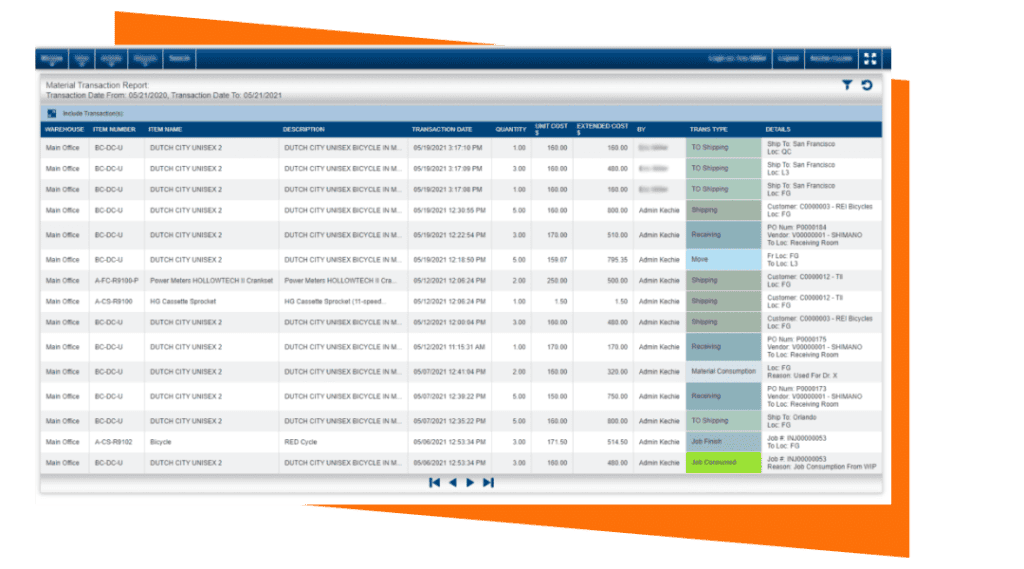
Does Kechie offer out-of-the-box reports compared to NetSuite?
Yes. Kechie ERP includes a large library of ready-to-use reports out of the box. In contrast, NetSuite often requires organizations to build many reports themselves.
Can Kechie handle multi-warehouse operations?
Yes. Real-time inventory visibility across multiple warehouses and locations is a foundational capability.
Does Kechie support advanced manufacturing workflows?
Yes. Multi-level BOMs, MRP, work center scheduling, job costing, and third-party production management are built into the platform.
Is implementation faster than NetSuite?
Implementation timelines vary by complexity, but Kechie’s structured deployment model is designed to reduce extended rollout cycles and operational disruption.
When Kechie Is the Stronger NetSuite Alternative
Kechie is often a strong fit for companies that:
- Operate multiple warehouses or production facilities
- Manage high SKU volumes
- Require strong manufacturing depth
- Need real-time alignment between operations and finance
- Prefer structured implementation over extended consulting
- Prioritize operational clarity and scalability
If these conditions describe your organization, a focused ERP platform may provide stronger long-term alignment than a broad, finance-centric system.
Evaluate Based on Your Operational Reality
ERP selection should not begin with brand recognition. It should begin with how your business runs.
How quickly can you see inventory across locations?
How accurately does production planning reflect demand?
How easily can leadership review margin by product or job?
How much manual reconciliation exists between departments?
If these questions resonate, it may be time to evaluate a NetSuite alternative built around operational flow.
Let’s review your warehouse structure, manufacturing environment, and reporting requirements and determine whether Kechie provides the right foundation for your next stage of growth.
Book a 10-minute ERP evaluation call
Download the ERP_Evaluation_Checklist_Clickable
Schedule a Free Demo Today!
See how Kechie ERP can transform your business, save you time, money, and aggravation. Click the button below to schedule your free demo.
Schedule Your Kechie Demo Now!In This Article
-Why Companies Search for a NetSuite Alternative
-Operational Architecture: Finance-First vs Inventory-First ERP
-NetSuite Alternative for Distribution Companies
-NetSuite Alternative for Manufacturing Companies
-ERP Implementation Without Extended Disruption
-Cost Structure and Long-Term Scalability
-NetSuite vs Kechie: Strategic Comparison
-Frequently Asked Questions About NetSuite Alternatives
-When Kechie Is the Stronger NetSuite Alternative
-Evaluate Based on Your Operational Reality