What is an ERP system, and how is it used?
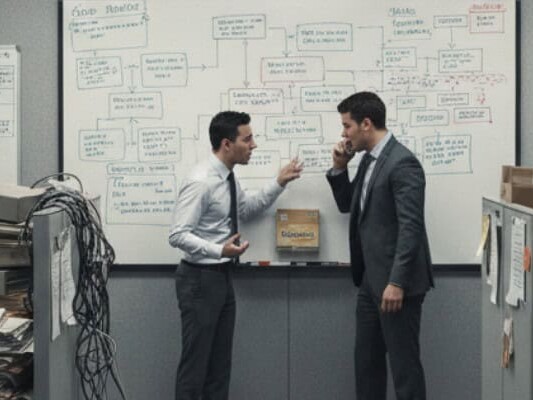
There’s a point in nearly every growing manufacturing or distribution business when the cracks begin to show.
Inventory doesn’t match across locations.
Sales promises a ship date production can’t meet.
Finance closes the month and finds margin gaps no one expected.
The team is working hard. The problem isn’t effort — it’s fragmentation. Systems don’t communicate, data lives in silos, and decisions rely on incomplete information. That’s typically when companies begin exploring a cloud ERP solution.
But before evaluating vendors, it helps to answer the core question clearly:
What is an ERP system, and how is ERP software actually used in a real operation?
What Is an ERP System?
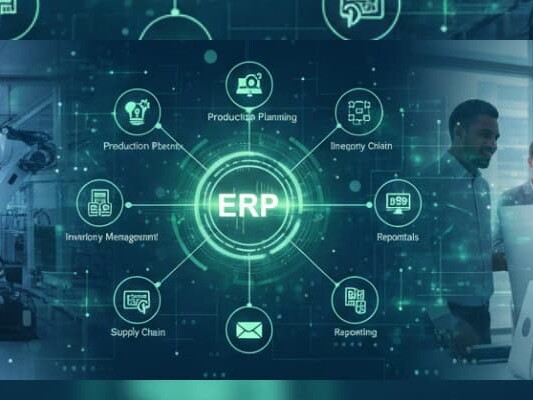
An ERP system, short for Enterprise Resource Planning, is software that centralizes your core business functions into one connected platform.
Instead of operating with:
- Accounting in one system
- Inventory management software in another
- CRM disconnected from operations
- Production planning in spreadsheets
- Purchasing managed through email
An ERP system integrates everything.
- One database.
- One workflow.
- One real-time source of truth.
When a sales order is entered, inventory updates immediately. Material Requirements Planning (MRP) recalculates demand. Production schedules adjust. Financial projections reflect the impact instantly.
ERP software connects departments that typically operate in silos. That connection is what removes operational friction.
Why Growing Companies Move to Cloud ERP
Most companies do not start with ERP software. They grow into needing one.
Early on, accounting software and spreadsheets work.
But growth adds complexity:
- More SKUs
- More customers
- More warehouses
- More vendors
- More compliance requirements
As complexity increases, disconnected tools become bottlenecks. Inventory discrepancies rise. Production planning turns reactive. Purchasing responds to shortages instead of anticipating them. Sales data fails to align with operational capacity
This is where a scalable ERP becomes essential.
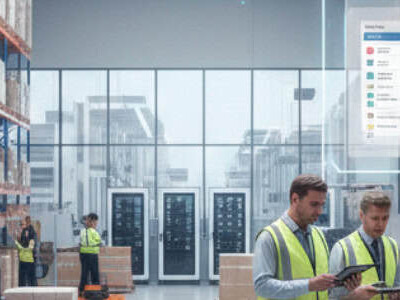
Cloud ERP for manufacturing companies solves this by centralizing data and making it accessible in real time across departments and facilities.
How Is ERP Software Used in Manufacturing and Distribution?
Let’s move from theory to application.
Here’s how a manufacturing ERP system functions day to day.
Inventory Management: The Foundation
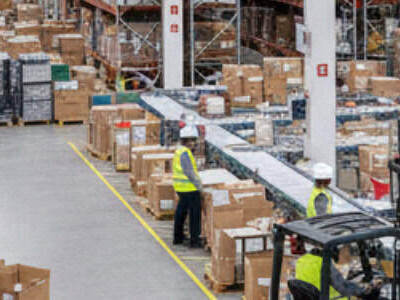
In manufacturing and distribution, inventory is the operational backbone.
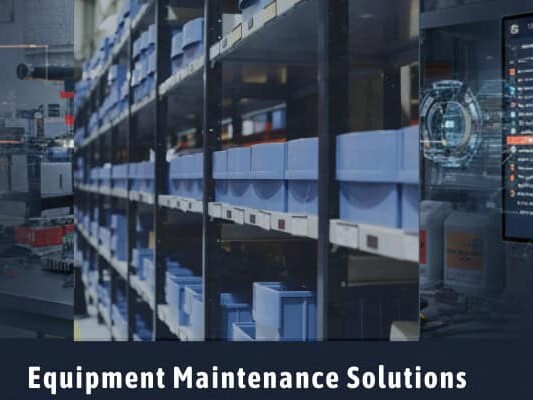
A cloud ERP for manufacturing companies includes advanced inventory management software that allows you to:
- Track multi-warehouse inventory in real time
- View available, committed, and incoming quantities
- Manage lot and serial tracking
- Automate reorder points
- Reduce overstock and stockouts
For ERP for distributors, this ensures accurate fulfillment across locations.
For manufacturers, this ensures raw materials and finished goods remain synchronized with production schedules.
When inventory lives inside a connected ERP system, data flows automatically to purchasing, production, CRM, and finance. This synchronization protects margins and improves fulfillment accuracy.
Manufacturing and Production Planning
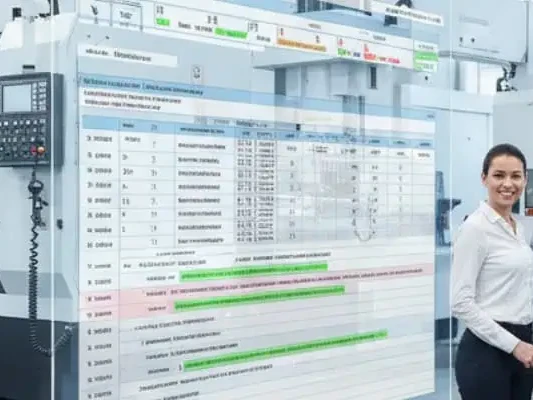
A manufacturing ERP system connects shop floor operations directly to demand.
ERP software enables:
- Bills of materials management
- MRP calculations
- Work center scheduling
- Labor and material cost tracking
- Real-time production monitoring
Rather than reacting to shortages, MRP forecasts material requirements. Instead of guessing capacity, you see workload across work centers. A cloud ERP for manufacturing companies ensures this visibility across multiple facilities without infrastructure burden.
Purchasing and Supply Chain
Without ERP software, purchasing often operates in reaction mode.
With ERP implementation:
- MRP identifies shortages before they occur
- Reorder thresholds trigger automatically
- Vendor performance becomes measurable
- Purchasing aligns with forecasted demand
This shifts procurement from firefighting to strategic planning. ERP for distributors especially benefits here, as supply chain complexity increases with scale.
CRM: Aligning Sales With Operations
Customer relationship management is frequently isolated from operational systems. In a unified ERP environment, CRM connects directly to inventory, production, and finance.
An ERP system with built-in CRM allows you to:
- Track open quotes and sales pipelines
- View customer order history
- Monitor payment behavior
- Analyze buying trends
- Manage returns and service cases
When CRM is embedded inside ERP software:
Sales cannot overpromise capacity.
Operations see demand trends early.
Finance forecasts revenue accurately.
Alignment improves performance.
Order Management: From Quote to Cash
Here’s what synchronization looks like in practice.
A large order enters the ERP system.
Inventory allocates automatically.
MRP recalculates material demand.
Production schedules adjust.
Purchasing receives shortage alerts.
Finance sees revenue impact instantly.
Without ERP software, this requires emails, calls, and manual checks. With a cloud ERP for manufacturing companies, it happens in seconds.
Financial Management: Real-Time Control
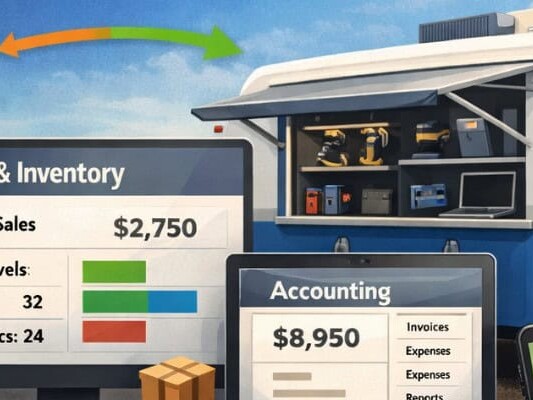
ERP software integrates financial management directly into operations.
It supports:
- Accounts payable
- Accounts receivable
- General ledger
- Revenue recognition
- Margin analysis by SKU and customer
Because operational data and financial data live inside the same ERP system, reporting reflects reality.
Not estimates.
Not delayed consolidations.
Real-time insight.
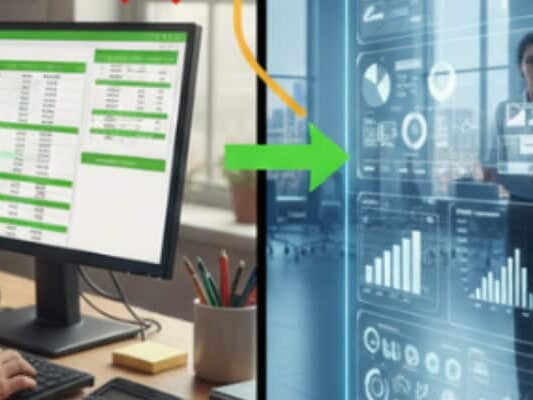
ERP vs Accounting Software
This is a common misconception.
Accounting software answers:
What happened financially?
An ERP system answers:
What is happening operationally right now?
Accounting records transactions.
ERP software manages the business.
For ERP for small to midsize businesses, the shift usually occurs when operational complexity exceeds accounting capabilities.
When Is It Time for ERP Implementation?
You may need ERP implementation if:
- Inventory discrepancies are frequent
- Reporting requires manual consolidation
- Production planning is reactive
- CRM is disconnected from operations
- Growth is stressing systems
- Multi-warehouse operations lack visibility
ERP implementation becomes necessary when fragmentation limits performance.
Cloud ERP vs On-Premise ERP
On-premise ERP requires internal servers and maintenance.
Cloud ERP software:
- Runs in a browser
- Updates automatically
- Scales easily
- Reduces IT overhead
For manufacturers and distributors expanding operations, cloud ERP provides flexibility without infrastructure burden.
The Real ROI of a Cloud ERP for Manufacturing Companies
ERP implementation is not about adding technology.
It’s about eliminating inefficiencies.
Companies adopting a scalable ERP often see:
- Lower inventory carrying costs
- Improved forecast accuracy
- Reduced fulfillment errors
- Faster month-end close
- Better cross-department alignment
- Increased customer retention
For operations leaders, ERP software delivers clarity.
Clarity reduces risk.
Reduced risk improves margins.
Where Kechie ERP Fits
If you are evaluating cloud ERP for manufacturing companies or ERP for distributors, operational fit matters.
Kechie ERP was built specifically for manufacturers and distributors that require:
- Real-time multi-warehouse inventory management
- Integrated manufacturing ERP system capabilities
- Built-in CRM connected to operations
- Automated financial reporting
- Scalable cloud ERP architecture
Kechie ERP centralizes inventory management software, CRM, production planning, purchasing, and finance into one unified ERP system.
Not stitched modules.
Not fragile integrations.
A connected foundation built for growth.
Ready to See How It Works?
If your organization is experiencing:
- Inventory visibility issues
- Production planning bottlenecks
- Disconnected CRM and operations
- Manual reporting burdens
It may be time to evaluate a cloud ERP for manufacturing companies.
Schedule a Free Demo Today!
See how Kechie ERP can transform your business, save you time, money, and aggravation. Click the button below to schedule your free demo.
Schedule Your Kechie Demo Now!In This Article
-How Is ERP Software Used in Manufacturing and Distribution?
-Inventory Management: The Foundation
-Manufacturing and Production Planning
-Purchasing and Supply Chain
-CRM: Aligning Sales With Operations
-Order Management: From Quote to Cash
-Financial Management: Real-Time Control
-ERP vs Accounting Software
-When Is It Time for ERP Implementation?
-Cloud ERP vs On-Premise ERP
-The Real ROI of a Cloud ERP for Manufacturing Companies
-Where Kechie ERP Fits