

Efficient Consumable Inventory Management
Efficient Consumable Inventory Management: Tips for Success in Supply Chain Optimization

Welcome to the ultimate guide to efficient consumable inventory management! If you're looking to streamline your supply chain, reduce costs, and achieve maximum efficiency in your business operations, you've come to the right place. From inventory tracking to stock rotation and fostering strategic supplier partnerships, we'll show you the secrets to mastering consumable inventory management software and achieving supply chain success.
Understanding Consumable Inventory
Consumable inventory plays a crucial role in various businesses and industries. These items are used and depleted over time, requiring frequent replenishment. Common examples include office supplies, cleaning products, perishable goods, and medical disposables. Proper management of consumables ensures a smooth workflow, reduces waste, and keeps costs in check.
Consumable inventory encompasses a wide range of goods that have the following characteristics:
- Finite Usage: Consumable items are intended to be used up or depleted over a relatively short period. For instance, printer paper, pens, and coffee supplies are regularly consumed in offices.
- Regular Replenishment: Due to their limited lifespan, consumable items require frequent replenishment. Proper tracking and timely reordering are essential to avoid stockouts and disruptions.
- Non-Durable Nature: Consumable goods are typically not designed for long-term use or storage. Perishable items, for example, have a limited shelf life and must be used before they expire.
- Varied Usage: Consumable inventory varies based on the industry and business type. It can include items like cleaning supplies, medical disposables, packaging materials, and more.
Tips for Success in Consumable Inventory Management
- Inventory Tracking: Stay one step ahead by implementing modern inventory tracking systems. Monitor your consumable stock levels in real-time, allowing you to forecast reordering needs accurately.
- Strategic Stock Rotation: Keep your inventory fresh and minimize waste with stock rotation techniques like First In, First Out (FIFO) or Last In, First Out (LIFO). Avoid holding on to outdated items and ensure optimal product usage.
- Optimization for Efficiency: Analyze consumption patterns and optimize inventory levels. This proactive approach prevents overstocking and ensures you have the right amount of inventory on hand when you need it.
- Smart Reordering: Simplify the reordering process by setting automatic reorder points. This ensures that when inventory reaches a specified threshold, purchase orders are generated, streamlining the replenishment process.
- Nurturing Supplier Partnerships: Cultivate strong relationships with suppliers to secure favorable terms, discounts, and reliable deliveries. Effective communication helps anticipate potential shortages and changes in the supply chain.
- Empower Your Team: Educate your employees about the significance of inventory management and involve them in the process. Empowerment fosters accountability and encourages responsible consumption of consumable items.
Conclusion
Efficient consumable inventory management is the key to a well-orchestrated supply chain. By understanding the nature of consumable items and implementing the right strategies, you can minimize waste, optimize costs, and ensure a seamless flow of essential products. Embrace the tips outlined in this guide to enhance your inventory practices and achieve supply chain success. Streamline your operations and achieve efficiency today!
Experience a transformation in your supply chain success by investing in Kechie inventory management software. Contact My Office Apps now to explore how our team can support your organization's growth and sustainability.


Inventory Management Software for Non Profit Sector
The Crucial Role of Inventory Management Software in the Non-Profit Sector
 In today's fast-paced digital world, non-profit organizations face numerous challenges in managing their operations effectively. From limited resources to budget constraints, these organizations require innovative solutions to optimize their workflows and maximize their impact. This is where reliable inventory management software comes into play, offering a multitude of benefits to streamline operations and drive success in the non-profit sector.
Efficient resource allocation is crucial for non-profits, as it directly impacts their ability to fulfill their mission. With an effective inventory management software in place, non-profit organizations can gain complete visibility and control over their inventory. This enables them to track and manage their resources, such as supplies, equipment, and donations, in real time. By accurately monitoring stock levels and usage patterns, non-profits can ensure that their resources are allocated appropriately, minimizing waste and maximizing efficiency.
Cost savings are of paramount importance for non-profit organizations, as they rely heavily on donor contributions and grants. Implementing a good inventory management software can significantly reduce costs by preventing overstocking or understocking of essential items. With accurate data on hand, non-profits can make informed purchasing decisions, negotiate better deals with suppliers, and eliminate the need for expedited deliveries or emergency purchases. This not only saves money but also frees up funds that can be redirected toward the organization's core mission.
Transparency is a vital aspect of any non-profit organization, especially when it comes to managing inventory. Donors and stakeholders need assurance that their contributions are being utilized efficiently and responsibly. An inventory management software provides the necessary transparency by maintaining a comprehensive record of inventory movements, usage, and depletion. This enables non-profits to generate detailed reports and demonstrate accountability, fostering trust among their supporters and enhancing their reputation.
Furthermore, inventory management software empowers non-profit organizations with advanced features and functionalities. It can automate various tasks, such as generating purchase orders, tracking expiration dates, and managing multiple storage locations. This automation reduces manual errors, saves time, and allows staff members to focus on more strategic activities. Additionally, inventory management software often integrates with other systems, such as accounting and fundraising platforms, creating a seamless workflow and eliminating data silos.
At My Office Apps (MOA), we understand the unique challenges faced by non-profit organizations, and we are passionate about supporting them and giving back to the community. Our team is dedicated to helping non-profits implement Kechie inventory management software to meet your specific needs. Contact us today for more information on how our experienced team can assist your organization in streamlining operations, maximizing efficiency, and making an even greater impact on the communities you serve.
Invest in Kechie inventory management software, and witness the transformation it brings to your non-profit's success. Contact MOA now to explore how our team can support your organization's growth and sustainability.

The Power of Purchase Requisition Automation
Streamlining Purchasing Processes: The Power of Purchase Requisition Automation
 In the world of business, efficiency and accuracy are paramount, particularly when it comes to procurement processes. Purchase requisition automation has emerged as a transformative solution, enabling organizations to streamline their purchasing workflows, enhance collaboration, and convert requisitions into purchase orders seamlessly. In this blog post, we will explore the concept of purchase requisition automation, delve into its utilization in converting requisitions into purchase orders, and discuss the numerous benefits it offers to businesses.
Understanding Purchase Requisition Automation
A purchase requisition is a formal request made by an employee or department within an organization to procure goods or services. Historically, this process involved manual paperwork, lengthy approval cycles, and the potential for errors or delays. However, with the advent of purchase requisition automation, these challenges have been significantly mitigated.
Purchase requisition automation leverages technology, such as specialized software or enterprise resource planning (ERP) systems, to digitize and streamline the requisition process. It enables employees to submit requisitions electronically, allowing for faster and more accurate data entry, and automates the routing and approval workflows based on predefined rules and hierarchies.
The Conversion to Purchase Orders
One of the primary advantages of purchase requisition automation is its ability to seamlessly convert requisitions into purchase orders. Once a requisition has been approved, the automation system facilitates the conversion process, ensuring a smooth transition from the request phase to the procurement phase.
- Validation and Verification: Automated systems validate requisition details, such as product specifications, quantities, budget availability, and vendor selection. This eliminates manual errors and ensures compliance with organizational policies and procedures.
- Supplier Communication: The automation system automatically sends purchase orders to selected suppliers, either via email or electronic data interchange (EDI), reducing the need for manual intervention and enhancing communication efficiency.
- Order Tracking: By linking the purchase order back to the original requisition, automation systems provide real-time visibility into the status of the order, enabling stakeholders to track the progress, delivery dates, and any changes or updates.
Benefits of Purchase Requisition Automation
1. Time and Cost Savings: Automation reduces the manual effort required for data entry, approval routing, and order processing, freeing up valuable time for employees to focus on strategic tasks. Additionally, it eliminates paper-based processes, reducing printing, storage, and shipping costs.
2. Enhanced Accuracy: Automation significantly reduces the risk of errors by eliminating manual data entry and ensuring compliance with established rules and policies. This leads to improved data accuracy, resulting in fewer discrepancies and disputes.
3. Streamlined Workflows: Automated requisition processes follow predefined workflows, allowing for consistent and standardized procedures. This streamlines the overall purchasing process, reduces bottlenecks, and enhances collaboration between requesters, approvers, and suppliers.
4. Improved Visibility and Analytics: By capturing and storing data throughout the requisition and purchase order process, automation systems provide valuable insights and analytics. Organizations can analyze spending patterns, track vendor performance, identify cost-saving opportunities, and make data-driven decisions.
5. Compliance and Audit Readiness: Automated systems provide a reliable audit trail, ensuring compliance with internal controls and external regulations. Organizations can easily access historical records, approvals, and purchase orders, facilitating audits and supporting compliance efforts.
Conclusion
Purchase requisition automation has revolutionized the way businesses manage their procurement processes. By digitizing and streamlining requisitions and automating the conversion to purchase orders, organizations can achieve increased efficiency, accuracy, and cost savings. The benefits extend beyond operational enhancements, providing improved visibility, analytics, compliance, and audit readiness.
Embracing purchase requisition automation allows businesses to shift their focus from mundane administrative tasks to more strategic initiatives, driving overall productivity and success. As technology continues to advance, organizations should consider adopting modern purchase requisition automation solutions to stay competitive in the ever-evolving business landscape. By implementing such advanced systems, businesses can streamline their procurement processes, reduce manual errors, and improve efficiency.
If you're ready to streamline your procurement process and take advantage of the benefits of purchase requisition automation, contact us today. Our team of experts can guide you through the implementation of a comprehensive procurement system that incorporates purchase requisition automation and other advanced features. With our expertise, you can optimize your purchasing workflows, increase efficiency, and drive cost savings. Don't miss out on the transformative power of purchase requisition automation - reach out to our company and revolutionize your procurement processes today www.myofficeapps.com.
To learn more about our procurement solutions and how we can assist your organization, contact us to schedule a demo. We look forward to discussing your requirements and helping you achieve a seamless and efficient procurement process.
10 Reasons Businesses Need Automation Software
10 Reasons Businesses Need Automation Software
More than 600,000 new businesses are formed in the United States each year. Unfortunately, not all of these have staying power in their industries.
One of the most essential attributes of a successful company is efficiency and reliable data for financial growth. Automation software can help you take your efficiency to the next level, but not everybody understands major benefits of automating their existing process.
There are several reasons why businesses need automation, including increased efficiency, cost savings, improved accuracy, and the ability to scale operations.
1. Increased Efficiency and Productivity
As you might assume, automation software can improve efficiency and productivity. This can be achieved through various means such as automation, process optimization, better time management, and effective delegation of tasks.
Automation can also free up employees to focus on higher value tasks, reduce errors and delays, and provide real-time data for better decision-making.
It removes manual steps for processes that would otherwise be time-consuming. It is important to identify areas that can benefit from these improvements and implement strategies accordingly.
2. Streamlined Business Processes and Workflows
Automation software also allows businesses to streamline their processes and workflows. This can be accomplished by eliminating redundant steps. In turn, it allows for tasks to be completed more accurately. Put simply, automation can allow you to focus on the most important tasks.
Cloud-based software can help you streamline your workflow even further by providing real-time information for planning to meet the ever changing demand expectations..
3. Accurate and Consistent Results
A major benefit of business automation software is the ability to achieve accurate and consistent results. By automating your processes, you can ensure that you have reliable data sources. It is important to maintain accurate and real-time data, follow established methodologies, and validate your findings through peer review or other forms of independent verification. Additionally, maintaining clear documentation of your methods and assumptions can help to ensure transparency and reproducibility in your work.
This makes it easier to track progress, identify trends, and make informed decisions quickly and accurately.
4. Improved Customer Service and Satisfaction
Automation allows businesses to respond quickly to customer requests. It also increases accuracy when completing transactions. Automation can even provide personalized support by having historical data and audit trail available during interaction with your customer. Providing personalized and efficient service can also help enhance customer satisfaction. It can help you collect, analyze, and respond to customer feedback in a more organized and efficient way. Additionally, implementing a system for regularly checking in with customers and addressing their concerns promptly to ensure that customers get the best possible service with every interaction and reduce the likelihood of negative feedback.
5. Ability to Scale and Adapt to Business Growth
As your business grows, you may find that manual processes are no longer able to keep up with the increased workload. Scaling and adapting to business growth is a crucial aspect for any successful organization. To achieve this, businesses need to have flexible processes and systems in place that can accommodate growth without sacrificing efficiency. This includes investing in technology, hiring the right talent, and having a clear strategy for expansion. By constantly evaluating and adjusting to changing market conditions, businesses can stay ahead of the competition and continue to grow.
6. Significant Cost Savings and Risk Minimization
Automation can help you significantly reduce costs no matter what industry you work in. Implementing cost-saving measures and minimizing risk are both essential for successful business operations. By identifying areas where expenses can be reduced and implementing strategies to mitigate potential risks, companies can improve their bottom line and protect their assets. Some cost-saving measures include negotiating better prices with suppliers, optimizing operational processes, and reducing waste. Minimizing risk can be achieved through measures such as implementing strong security protocols, regularly assessing potential vulnerabilities, and ensuring compliance with relevant regulations. By prioritizing both cost savings and risk minimization, businesses can achieve long-term sustainability and success.
7. Better Collaboration and Communication Within Teams
Automation software can also help increase collaboration and communication within teams. By enabling employees to share tasks, documents, and information quickly, automation makes it easier for teams to get things done.
This allows workers to stay organized and ensure that every task is completed on time and with accuracy.
8. Enhanced Data Storage and Security
Automation can help ensure that your business remains compliant with various regulations and protects both customers and employees alike. This is important to keep in mind given that the cybercrime industry is projected to be worth over $10 trillion by the end of 2025.
Enhanced data storage and security refers to the use of advanced technologies and techniques to improve the way data is stored and secured. This can involve the use of encryption, firewalls, access controls, and backup systems to protect data from unauthorized access, theft, and loss. Advanced storage technologies, such as cloud storage and solid-state drives, can also be used to improve data storage and accessibility.
9. Fewer Human Errors
Human error is one of the most common issues associated with manual processes. Automation eliminates this risk completely, allowing you to complete tasks quickly and accurately without any mistakes. This makes it easier to track progress and identify trends, as well as ensure that customers get the best possible service every time.
Reducing human errors can lead to increased efficiency and accuracy in various tasks. Some ways to minimize human errors include implementing standardized procedures, providing proper training, using technology to automate repetitive tasks, and implementing quality control measures.
Be sure to take this into consideration when moving forward. Avoiding human error can help take your company to the next level.
10. Future-Proofing Your Business Technology Infrastructure
Future-proofing your business technology infrastructure means ensuring that your technology setup can adapt to changes and advancements in the future without significant disruption or expense. This can involve investing in scalable and flexible solutions, keeping up with software updates, and anticipating emerging trends in technology.
By future-proofing your technology infrastructure, you can ensure that your business stays competitive and efficient in the long run.
How to Find the Right Business Software For Me?
When searching for the right automation software, it is important to keep your business needs in mind. Consider the size of your team, the types of tasks that need to be completed, and any specific requirements based on industry regulations.
You should also look for a platform that is easy to use, secure, and can scale with your business as it grows. Read reviews and speak with customer service representatives to ensure that you are making the right choice for your company.
When browsing through past feedback, you will be able to get a better understanding of the user experience you can expect to have. This can be invaluable when making your decision. For example, you can see if users have had issues with software crashing or technical difficulties.
Keep an eye out for how they respond to negative reviews. If they appear to be defensive or aggressive, it's in your best interest to search elsewhere. Otherwise, you run the risk of getting the same results.
You Shouldn't Overlook the Utility of Automation Software
As long as you implement automation software, you should reap the rewards. Automation software can greatly increase efficiency and productivity by streamlining repetitive tasks. It can also reduce the likelihood of errors and improve accuracy. Therefore, it is important not to underestimate the value of automation software in optimizing workflow processes.
Looking for more information on how we can help? Contact us to schedule a demo or learn more about how Kechie ERP Software can help streamline your business processes.

ERP for Distributors: Streamlining Operations for Efficiency and Growth
ERP for Distributors: Streamlining Operations for Efficiency and Growth

In today's competitive business landscape, distributors face numerous challenges in managing their operations efficiently while ensuring sustainable growth. Enterprise Resource Planning (ERP) systems have emerged as a powerful solution to address these challenges. We will explore the benefits of ERP for distributors, highlighting how it streamlines operations, enhances efficiency, and fosters growth. Whether you're a small distributor looking to scale up or an established one aiming to optimize processes, implementing an ERP system can be a game-changer for your business.
1. Enhanced Inventory Management
Effective inventory management is crucial for distributors to avoid stock-outs, optimize storage, and reduce carrying costs. An ERP system provides real-time visibility into inventory levels, allowing distributors to track stock movement accurately. With features like automated reorder points and demand forecasting, distributors can streamline procurement and maintain optimal inventory levels. ERP systems also enable the categorization and classification of inventory, making it easier to identify slow-moving or obsolete items.
Furthermore, ERP systems integrate with warehouse management systems, enabling seamless coordination between inventory and order fulfillment. This integration allows for efficient picking, packing, and shipping processes, leading to faster order processing and reduced fulfillment errors. Distributors can also leverage barcode scanning and RFID technologies to improve inventory accuracy and streamline the receiving and dispatching of goods. By optimizing inventory management, ERP systems help distributors minimize carrying costs, improve order fulfillment rates, and enhance customer satisfaction.
2. Efficient Order Processing
Order processing is a critical aspect of distribution operations. Manual order entry and processing can be time-consuming and error-prone, leading to delays and dissatisfied customers. ERP systems automate order processing, enabling distributors to receive, process, and fulfill orders efficiently. Through centralized databases and streamlined workflows, distributors can automate tasks such as order entry, invoicing, and payment processing.
Moreover, ERP systems integrate with e-commerce platforms, allowing distributors to seamlessly manage online orders, inventory synchronization, and customer information. This integration ensures that data is updated in real-time across multiple channels, reducing the risk of overselling or stock-outs. Distributors can also implement automated order tracking and status updates, providing customers with visibility into the progress of their orders.
By minimizing manual intervention and streamlining order processing, ERP systems help distributors improve customer satisfaction, reduce order cycle times, and enhance overall operational efficiency. With automated workflows and accurate order management, distributors can focus on delivering exceptional customer experiences while efficiently managing their order fulfillment processes.
3. Streamlined Supply Chain Management
A well-optimized supply chain is crucial for distributors to meet customer demands promptly and cost-effectively. ERP systems facilitate end-to-end supply chain management by integrating processes across the entire distribution network. From procurement and inventory management to production planning and logistics, ERP systems provide real-time visibility into the supply chain, enabling distributors to make data-driven decisions.
Distributors can track supplier performance, optimize lead times, and enhance collaboration through automated workflows and communication channels. By centralizing supplier information and streamlining the procurement process, ERP systems help distributors negotiate better terms and reduce costs. Additionally, advanced features such as demand forecasting and sales analysis enable distributors to anticipate customer demands and optimize inventory levels accordingly.
ERP systems also enable efficient production planning by integrating with manufacturing systems. Distributors can optimize production schedules, manage bill of materials (BOM), and track work orders, ensuring timely and cost-effective production processes. By streamlining the supply chain, ERP systems help distributors reduce costs, minimize bottlenecks, and improve overall operational efficiency.
4. Accurate Financial Management
Maintaining accurate financial records is essential for distributors to monitor profitability, manage cash flow, and comply with regulatory requirements. ERP systems provide comprehensive financial management capabilities, including general ledger, accounts payable, and accounts receivable modules. By automating financial processes, ERP systems reduce the risk of human error, ensure timely and accurate financial reporting, and facilitate better financial decision-making.
Distributors can generate real-time financial statements, monitor key performance indicators, and gain insights into their financial health. ERP systems enable efficient management of vendor invoices and payments, allowing for streamlined accounts payable processes. Likewise, accounts receivable modules automate the creation of customer invoices, track payments, and manage credit limits effectively.
ERP systems also integrate with banking systems and payment gateways, enabling seamless transaction processing and reconciliation. Distributors can automate bank statement imports, reduce manual data entry, and enhance cash flow management. With robust financial management features, ERP systems empower distributors to have better control over their finances and drive sustainable growth.
5. Actionable Business Insights
ERP systems capture vast amounts of data across various business functions. By leveraging advanced analytics and reporting capabilities, distributors can transform this data into actionable insights. ERP systems offer customizable dashboards, data visualization tools, and reporting modules, allowing distributors to monitor key performance indicators, track sales trends, and identify areas for improvement.
With real-time and accurate data at their fingertips, distributors can make informed decisions, optimize processes, and seize growth opportunities. By analyzing sales data, distributors can identify their most profitable products, target specific customer segments, and develop effective pricing strategies. Additionally, ERP systems enable effective sales pipeline management, allowing distributors to track leads, opportunities, and sales activities.
Moreover, ERP systems support business intelligence integrations, enabling distributors to leverage advanced analytics tools for predictive analysis and forecasting. By analyzing historical data and market trends, distributors can anticipate demand fluctuations, adjust production schedules, and optimize inventory levels. Such proactive decision-making can help distributors stay ahead of the competition and achieve long-term success.
Conclusion
ERP systems have revolutionized the way distributors manage their operations by streamlining processes, enhancing efficiency, and fostering growth. From inventory management and order processing to supply chain management and financial control, ERP systems provide the necessary tools and functionalities for distributors to thrive in today's competitive business environment. By implementing an ERP system, distributors can optimize their operations, improve customer satisfaction, and drive sustainable growth. Embracing ERP technology is a strategic investment that can propel distributors toward success in the ever-evolving distribution landscape.
Learn how we can support your business by Schedule a free demo of Kechie ERP today!
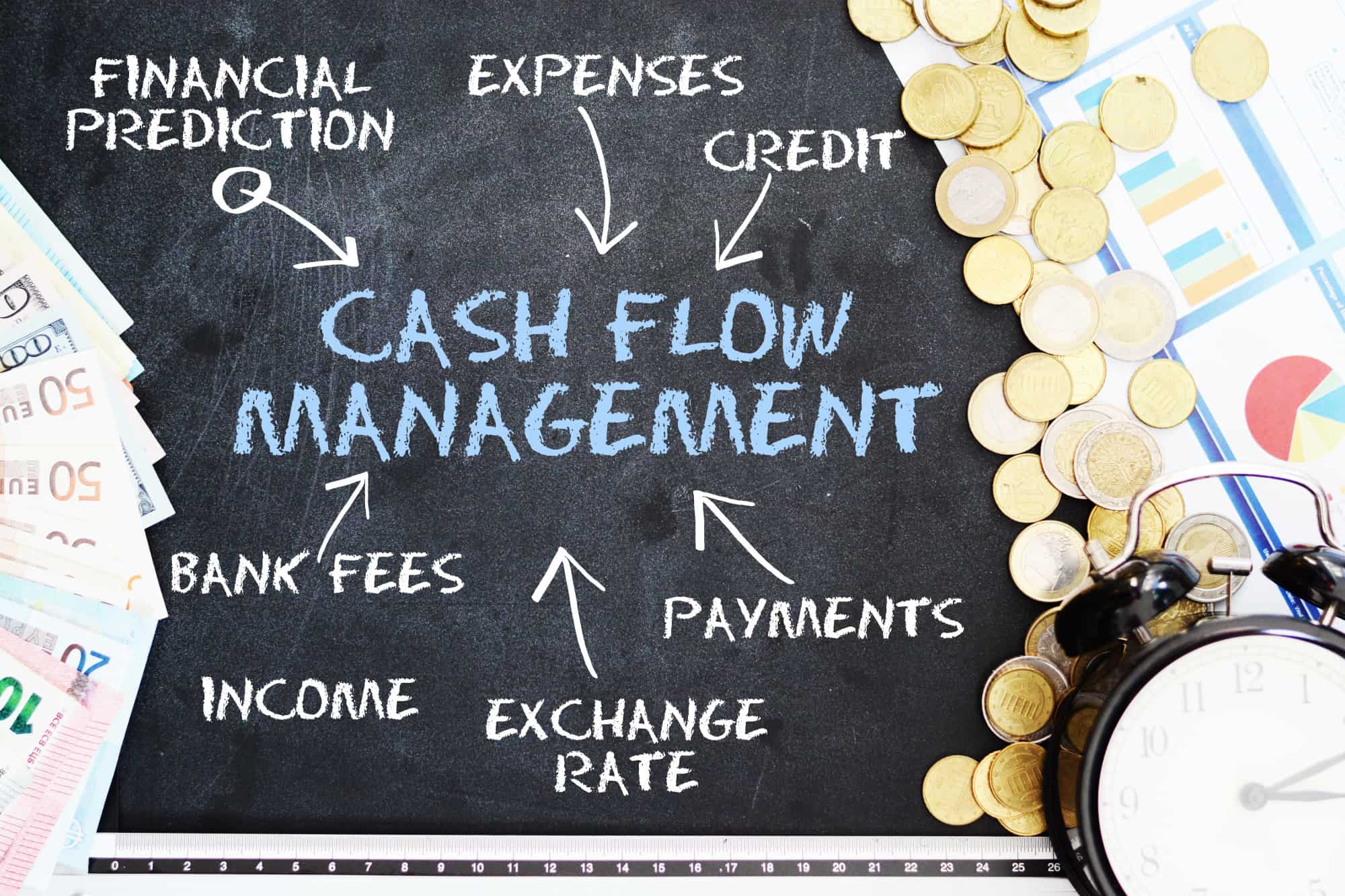
8 Cash Flow Management Tips for Your Business
8 Cash Flow Management Tips for Your Business
Among small business owners in the United States, nearly a quarter say that poor cash flow is their biggest challenge in running their business. Because cash flow is how business owners pay their bills and earn money to grow their businesses, this is an area that entrepreneurs need to build skills in to maintain the health of their businesses.
If you're struggling with cash flow management, you're not alone. In business education programs and training, a lot of attention is paid to monitoring your profit, not your cash. You likely just need some pointers to help you get back on track with monitoring your money.
To help you do just that, we've collected eight tried-and-true tips for managing cash flow as a business owner.
1. Keep Track of Cash Flow
The first mistake a lot of new business owners make is tracking their profit but not their cash flow.
While it's great to stay aware of your profit quarter over quarter, tracking your cash flow gives you a more in-the-moment view of the financial health of your business. It also gives you a more accurate sense of how much money you have available for immediate use.
To get a sense of the amount of liquid cash you have on hand, start tracking the cash flowing in and out of your business via accrual accounting or cash accounting.
2. Plan Ahead
Once you have a solid system for tracking your cash flow, use this information to predict your cash flow in the coming weeks and months. Track the timing of your anticipated incoming payments and outgoing expenses. Start to predict when you'll have gaps to cover or extra cash to spend.
In months where you have increased cash flow, set some of the money aside for a rainy day. Try to have 3 months' worth of expenses on hand. Use this emergency fund to cover expenses in months when you have less income than you predicted.
Once you have savings in place, you can also use extra funds to invest in your business, helping your cash to accrue interest and build value for your company. In general, it's wise to save just enough money for emergencies and then put the rest of your reserves to work for your business. Talk with your financial team about the exact right plan for you.
Finally, set up a line of credit as soon as you can. Doing this early means that the credit will be available for you to use when and if you need it. If you wait to do this until you already have a cash emergency, you might not be able to get it approved in time to save yourself from financial trouble.
3. Send Out Timely Invoices
You can't get paid until you send out your invoices to your clients. Make a habit of sending your customer invoices regularly and in a timely fashion. If you can, send invoices electronically rather than by mail.
Set a specific payment timeline for your clients, usually 1-2 weeks after receipt of the invoice. Send out reminders if you need to in order to receive the payment you're due. It may also be worth considering adding a late fee for payments received after the payment window to further incentivize your clients to pay you on time.
If you can, accept multiple methods of payment. Make it as easy as possible for your clients to give you the money they owe you.
4. Don't Make Payments Before You Need To
In case this doesn't go without saying, make payments to your vendors, landlord, and insurance companies on time. However, there's no need to make payments early if you don't have to.
Keep track of the due dates of all your expenses, and pay as close to the deadline as possible. If you're strapped for cash in a specific month, see if you can delay payment on any of those expenses without incurring a fine. Work with your vendors to create a payment plan that works for your business's cash flow.
If you have credit card debt, avoid accruing interest on the principal if you can. When paying off credit card debt and loans, pay the debts with the highest interest rates first.
5. Manage Your Inventory
If your business sells physical products, don't hold too much inventory in storage at once. Think of these products in terms of their dollar value: surplus inventory equals cash just sitting in your storerooms!
Keep inventory moving by strategically discounting prices and offering other special rates. Make wise purchasing decisions when you restock; while you might get a better per-unit price when ordering in bulk, it's only a deal if you can sell that inventory at a reasonable pace.
6. Audit Your Operations
Set aside time in your yearly calendar to conduct a company-wide audit of your operations and procedures.
Identify and eliminate redundancies in your practices. See if there are ways you can streamline and speed up any of your vital business operations. Make sure you have enough staff to cover your needs but don't retain more staff than is necessary.
7. Update Your Product Pricing
Invest time in market research to ensure that your pricing remains competitive. Test out different pricing levels to see what brings in the most revenue from your customers.
While it might be tempting to simply undercut the pricing of your competition, you might make more money overall by selling fewer units at a higher price. Don't be afraid to experiment to figure out what works best in your market!
8. Use Software to Your Advantage
Keeping track of all these pieces can be time-consuming and confusing. Consider automating as many of these processes as you can through ERP software.
An all-in-one solution can help you with sending invoices, making automatic payments, and much more.
Cash Flow Management Made Easy
While it can seem intimidating at first, successfully managing cash flow is simply a matter of setting up effective systems and sticking to them. However, doing this all manually takes valuable time and energy that would be better spent on growing your business.
This is where My Office Apps' Inventory Management software can help your business. With our Financial Management module, you have access to a comprehensive set of accounting features that enable complete financial tracking with enough flexibility for you to customize it according to your specific requirements.
Curious to learn how we can support your business? Schedule a free demo of Kechie ERP today!

7 Strategies to Organize Your Warehouse
7 Strategies to Organize Your Warehouse
Warehouses play a crucial role in any business’s operations, and it should come as no surprise that the number of warehouses worldwide increases each year. After all, these spaces are where businesses store their products and inventory before shipping them to retail outlets or delivering them to customers directly. Any problems at a business’s warehouse can slow down or even halt operations. This is a situation no business ever wants to be in. Such issues often arise when the warehouse is poorly organized.
If you’re interested in getting your warehouse organized and want to make your operations more efficient, you might be wondering where to start. In this guide, we will go over 7 simple strategies you can use to get your warehouse organized quickly.

1. Use Suitable Shelves, Racks, Bins, and Pallets
Organizing your warehouse is all about placing items in optimal storage areas and locations. For this reason, you should review how items are currently stored on shelves, racks, bins, and pallets.
You can also opt for better storage and shelving solutions such as flow-through racks, cantilever racks, push-back shelves, and drive-thru racks. Each of these storage solutions is useful for storing different types of items through suitable transportation methods.
For example, drive-thru racks are great for storing heavy items stacked on pallets that can only be moved using a forklift or pallet jack. Similarly, you can use cantilever racks to store bulky items with awkward dimensions rather than leave them on the warehouse floor where they may disrupt movement.
2. Group Items Based on Popularity
Your warehouse may contain a large number of product types, each of which may need to be retrieved at specific times. Many warehouses separate items into different categories based on the type of the product. For example, if you use your warehouse to store sporting goods, you may group all your fishing equipment together and your golf equipment elsewhere. This strategy may make sense at first, but it doesn’t take into account that certain fishing equipment or golf equipment is moved more frequently than others.
For this reason, it may make more sense to group items based on how often they are moved. So you can group fast-moving items together in one section of your warehouse, and group slow-moving items together in a different section. This ensures that warehouse staff won’t need to get slow-moving items out of the way to access fast-moving ones. Such an arrangement can improve your warehouse’s overall efficiency.
3. Warehouse Layout
The right warehouse layout can help improve operations and increase overall inventory accessibility. There are several options to automate and optimize your warehouse layout. The three main types of warehouse layout flow most often used by companies to organize the way their warehouse operates are U-shaped, I-shaped, and L-shaped.
With a warehouse layout, your organization can customize warehouse movement, reduce labor costs and increase overall productivity.
4. Set Up a Digitized Receiving Dock
If your warehouse doesn’t already have a receiving dock, now is the best time to add one. Having a receiving enables delivery trucks to park next to your loading area. This lets warehouse staff load and unloads items with greater efficiency.
You can also set up a digitized system where staff can apply and scan barcode labels to keep track of items entering and exiting the warehouse.
5. Label Your Shelves, Bins, and Racks
Another important strategy to keep your warehouse organized is to label shelves, bins, and racks. Labeling shelves, racks, and bins with barcodes is a very efficient way of tracking your inventory. Now by using a barcode scanner, you can make your picking easy and error-free. By labeling your locations, you can track inventory in real time and organize your warehouse more efficiently.
6. Rethink Shelf and Box Arrangements
It is also worth checking your warehouse’s storage capacity while reorganizing. This is important as there is a good chance you are underusing some space in certain regions.
So consider calculating your warehouse’s internal volume and comparing it with the volume of product boxes in the warehouse. If there seems to be a lot of extra space, you should observe how your shelves are spaced out. You could potentially move some shelves closer together to reduce wasted space and increase your storage capacity.
You can also check how much vertical space you have left and stack certain boxes higher accordingly when you organize your warehouse.
7. Use an Automated Warehouse Management System
An automated warehouse management system is one of the best tools you can rely on when organizing your warehouse. Without a system in place to keep track of your inventory/assets, it can pose a challenge for your employees to perform their tasks effectively. These systems are great because you can also utilize barcode scanners scanners and label printers to keep track of the inventory at all times.
Warehouse automation allows you to get a comprehensive overview of where everything is and identify any areas that could be reorganized. Many warehouse managers rely on such systems because they also help make operations more efficient and reduce errors. The act of managing thousands of items on a daily basis becomes a breeze when you know what needs to go where and when.
Final Thoughts
As you can see, managing a warehouse can seem challenging at first. However, there are plenty of ways to do this effectively. The strategies described above should be useful to any warehouse manager who is interested in organizing or reorganizing their warehouse to maximize productivity and efficiency.
Getting your warehouse organized is a great start, but maintaining this organization can also be tricky. For this reason, you should invest in a reliable automated warehouse management software that allows you to stay on top of warehouse activities and identify areas where improvements could be made.
Looking for more information on how we can help? Contact us to schedule a demo or learn more about how Kechie ERP Software can help streamline your business processes.
Integrations between Kechie and QuickBooks Online
My Office Apps Introduces Its Unique Two-way Integrations between Kechie™ and QuickBooks Online
IRVINE, Calif., April 18, 2023 /PRNewswire/ -- My Office Apps, Inc. (MOA), an industry leader in business improvement software, announced it now provides an integration with QuickBooks Online.
Our unique integration is a two-way sync between Kechie and QuickBooks online. Unlike other Inventory Management or ERP software solutions, that offer a one-way integration, Kechie has a two-way sync, meaning the data flows back and forth between the two systems seamlessly. As information is updated in Kechie it will automatically update QuickBooks Online and all relevant updates in QuickBooks Online will be synced to Kechie. Kechie also offers real-time inventory management with audit traceability to track all your transactions and sync the data into QuickBooks to help with your financial management.
The integration enables businesses to create and sync the following processes:
Vendors- Vendors created in Kechie or QuickBooks Online will automatically pass through to the other system.
Purchase Orders- Creating a PO in either system will auto-populate in the other system to maintain the synchronization of data. Once PO is received, the information is sent to QuickBooks Online to be paid.
Customers- Customers created in Kechie or QuickBooks Online will automatically update both systems. Kechie provides additional features and offers a complete CRM to help your sales department manage all their customers and pipelines.
Sales Order- Create Sales Order & Quotation in Kechie and once shipped the invoice is generated in Kechie and automatically sent to QuickBooks to create the invoice in QuickBooks Online, enabling the systems to work together more effectively. Kechie provides many reports to keep track and analyze of all your sales data.
Inventory- All detailed location information including bin and multi-warehouse locations will be maintained in Kechie, since QuickBooks Online does not offer these capabilities. Kechie has full inventory management functionality and upon any updates, the information will be synced with QuickBooks Online in real-time. Up-to-date inventory visibility is available at an instant via either system.
Items- Creating items in Kechie or QuickBooks Online allows data to be exchanged between both systems. Kechie will offer additional options for item attributes, categories, product types, and more, to help with detailed reporting.
Mariam Komeili, MOA co-founder and CEO, commented, "Some clients would like to do their accounting in QuickBooks Online, but need that advanced inventory management or ERP capability to run their business. Creating this integration will provide peace of mind for clients and still give them the advanced features to manage their inventory or even do manufacturing, while still utilizing QuickBooks Online."
About My Office Apps, Inc.
My Office Apps, Inc. (MOA) is a leader in business improvement software solutions to automate your organization. Building on three decades of software design and development, MOA delivers Kechie™, a transformative business tool. Kechie is a fully integrated Enterprise Resource Planning Software as a Service (SaaS) platform with a simplified user experience and the latest cloud technology. Sold in separate packages – inventory and warehouse management (CRM, Sales, Procurement, Logistics included), manufacturing, finance – or a fully configured ERP system to have all of these individual tools. Kechie is easily configured to the scalable needs of your growing business. For more information on managing your business processes more efficiently and effectively, visit My Office Apps.
This article was published on Cision PR Newswire

Revenue Recognition Functionality
My Office Apps Introduces New Revenue Recognition Functionality in the Finance Module of its Kechie™ ERP Software
IRVINE, Calif., March 28, 2023 /PRNewswire/ -- My Office Apps, Inc. (MOA), an industry leader in business improvement software, announced it is now including an automated revenue recognition functionality in the finance module of its cloud-based Kechie™ Enterprise Resource Planning (ERP) software as a new feature.
The revenue recognition capability in Kechie will now make it much easier for customers to stay compliant with the Financial Accounting Standards Board ASC 606 specification, Revenue from Contracts with Customers. Revenue recognition is an accounting principle that requires a company to only record revenue when it has been earned, not when the related cash is collected. It is often needed when a customer provides an up-front payment for a service to be delivered later or for certain transactions where the product or service is delivered in parts over an extended period. The new Kechie feature offers automated revenue recognition capability and eliminates much of the tedious manual work needed to make account adjustments periodically to keep a company's books up-to-date. Once a customer contract is set up in Kechie, the system will implement the necessary periodic accounting adjustments automatically, based on the length of the contact and how often the services are satisfied for recognition. The implementation is flexible for different periods to be setup, so if one wants to do this monthly instead of a quarterly basis, options are available.
Read more about New Revenue Recognition Functionality

Cloud-based ERP Software: What Is It and How It Works?
Cloud-based ERP Software: What Is It and How It Works?
In order to grow in the highly competitive business environment of today, organizations need state-of-the-art technology that can help them innovate and scale quickly. Businesses are in need of a digital transformation that can only be brought about by becoming globally connected, advanced, and competitive by focusing on software systems and tools updates, immediate access to real-time data, and implementing various growth initiatives. This is where cloud-based ERP software and all of its benefits come into play.
As technology evolves, businesses of all sizes, from startups to established big firms, are relying on cloud ERP because of its many benefits related to cost-effectiveness, speed, access, and reliability.
How Does Cloud ERP Software Work?
Cloud-based ERP software is an enterprise resource planning system that is connected to and runs with high-speed internet. This software is essential to integrating and automating various financial and operational business functions, offering users a single source of data.
Cloud-based ERP software offers limitless abilities for organizations to grow and empower their teams to access any information they need from anywhere at any time through desktop computers and mobile devices. The key capabilities of a cloud-based ERP platform include accessing customer information, financial data, human resource management tools, sales history, supply chain management, and so much more.
Cloud ERP software is hosted on a provider’s cloud computing platform and is used “as a service.” Customers do not own the software but can lease it from a cloud computing vendor on a monthly or annual subscription basis. The best part is that there are no hardware costs, and the vendor takes care of the data storage, data security, application maintenance, and upgrades.
Cloud ERP vs. On-Premise ERP
Cloud ERP is hosted by an external cloud computing platform and managed by the vendor’s IT team. On the other hand, on-premise ERP is installed on your own servers and hardware and is managed by an in-house IT team.
Due to its many benefits, businesses are increasingly embracing cloud technology when it comes to ERP deployment.
Functional Components of Cloud ERP Software
Cloud-based ERP software is so popular because it offers businesses a range of key financial and accounting capabilities. Depending on your business needs and goals, you can implement various types of applications or modules.
Some of the most popular cloud ERP modules are:
- Financial and Accounting
- Customer Relationship Management
- Order Management
- Logistics
- Procurement and Order Management
- Supply Chain Management
- Material Requirement Planning
- Inventory Management
- Warehouse Management System
- Manufacturing
- Shop Floor
- Service Center
- Returns to vendor
- Return Material Authorization Process
Top Benefits of Implementing Cloud-based ERP Software in Your Business
Cloud-based ERP delivers enormous value to businesses by helping them gain actionable insights and boost their productivity. Nowadays, customers expect continuous product and service improvements, rapid delivery of offerings, more flexibility, reduced cost, and greater reliability. They work with a range of partners, including sales management, support, production, product distribution, and other core business processes.
To handle all of this, the software is needed that not just seamlessly handles complex internal processes but also manages global business networks. Let’s take a look at how cloud-based ERP software benefits your organization:
Reduced Costs: One of the major benefits of cloud-based ERP software is the reduced cost, which starts during the implementation phase. The biggest downside of an on-premise ERP system is that it results in several upfront costs associated with creating an in-house IT team, data security and backup, purchase of servers, database creation, initial implementation, upgrades, and maintenance.
On the other hand, implementing cloud ERP software results in 30% lower costs since the cloud computing provider manages the software on their own servers and helps the business avoid upfront infrastructure costs and additional costs like updates, security, maintenance, and IT staff.
Quick Implementation: The time it takes to implement a new ERP solution is of paramount importance. If it takes a long time to integrate the ERP system, it can result in business downtime, which can be devastating to the bottom line. A cloud-based ERP software, however, is quicker to implement than on-premise ERP software since you don’t need to select or set up any hardware or train IT staff.
Seamless Accessibility: Cloud-based ERP platform allows businesses to access information in real-time from anywhere at any time. This creates a seamless flow of information across the organization and ensures all relevant employees are informed with the same data, resulting in better collaboration and faster and more accurate business decision-making.
Improved Scalability: Scaling your business becomes so much easier with a cloud-based ERP system. Your ERP system will grow along with your business as you start with the basics and add more functionalities without adding the extra burden of hardware. It eliminates the need for local servers, and as your company grows through acquisitions and mergers, it can quickly bring new units online. Cloud computing vendors own data centers around the world and keep their clients’ data in various locations, ensuring more reliability and security of data.
Easy Customization: Cloud-based ERP services can serve your business needs more easily as it evolves. On-premise ERP systems can also be customized, though the changes can be more difficult to implement since many customizations may not be compatible with future software. On the other hand, cloud-based ERP software can integrate well with other cloud products. In addition, it is flexible and allows new modules to be implemented to it without the need for additional hardware or downtime. This increases proactivity and resilience in a business, enabling it to respond quickly to any changes, customer behavior trends, and unexpected situations.
Ongoing Upgrades: Cloud ERP providers manage all system updates and upgrades in order to keep up with your business’s evolving needs. Implementing a cloud ERP system upgrade can take as little as 30 minutes, which usually takes place during off hours to prevent any business disruptions.
Better Data Security and Compliance: One of the biggest benefits of cloud ERP systems is that they offer better security and compliance than a company could afford on its own. Business data remains backed up on multiple servers, and the vendor is equipped with disaster recovery strategies and a business continuity plan. With cloud-based ERP software, you get the benefit of end-to-end encryption and enterprise-level security from the vendor.
Data Storage Resilience: If your on-premise server fails, it can be very expensive and time-consuming for the company to transfer the data to a new storage system. Cloud-based ERP systems, however, store data in multiple geographically dispersed data centers. This redundancy is significant for accessing business data online, which is crucial, considering that work is now moving online and businesses are seeking to automate and optimize their business processes.
Bottom Line
Cloud-based ERP systems are a sophisticated and proven solution used by thousands of companies all over the world to achieve digital transformation. Businesses that select cloud ERP services can accelerate their growth efforts since they have immediate real-time access to data and tools that can drive change, allowing them to capitalize on opportunities in the fastest ways possible.
Now is the time to get started with a cloud ERP system. At My Office Apps, our mission is to empower companies by leveraging cloud-based ERP technology. Talk to us today to discuss your business needs and start the journey to digital transformation.
Contact us to schedule a demo or learn more about how Kechie ERP Software can help streamline your business processes.