

8 Essential Features for Efficient Contract Management
8 Essential Features For Effective Contract Management

Kechie’s Contract Management Features:
1. Easily View & Update Customer Contracts
One of the fundamental features of a robust contract management system is the ability to view and update customer contracts easily. Kechie ERP's contract management functionality allows users to quickly access contract details, making it simpler to review terms, track amendments, and make necessary updates. With an intuitive interface, users can efficiently navigate through contract data, ensuring that information is current and accurate.
2. Automated Deferred Revenue Recognition
Deferred revenue recognition can be a complex and time-consuming task, especially for businesses with numerous contracts. Kechie ERP simplifies this process by automatically calculating and recording revenue as it is earned over time. This ensures compliance with accounting standards and provides accurate financial reporting, reducing the risk of errors and improving efficiency.
3. Intelligent Contract Tracking and Notifications
Keeping track of critical contract dates and milestones is crucial for effective contract management. Kechie ERP provides intelligent contract tracking and notifications, offering automated alerts for key events such as renewal dates, expiration dates, and performance milestones. This proactive approach helps prevent missed deadlines, ensuring that necessary actions are taken on time and enhancing overall contract performance.
4. Fully Integrated with the AR Module
Integration with the Accounts Receivable (AR) module is essential for seamless financial operations. Kechie's contract management system is fully integrated with the AR module, enabling real-time synchronization of contract data with financial records. This integration ensures that billing, payments, and revenue recognition are accurately reflected in the company's financial statements, promoting consistency and reliability.
5. Real-Time Visibility and Integration
Real-time visibility and integration across various business functions are critical for effective decision-making. Kechie ERP's contract management system provides real-time capabilities, allowing stakeholders to access up-to-date contract information and performance metrics at any time. This level of transparency fosters better collaboration, improves responsiveness to changes, and supports strategic planning.
6. Run Reports on Contracts
Generating comprehensive reports on contract performance and status is vital for informed management. Kechie ERP enables users to create detailed reports on various aspects of contracts, such as revenue forecasts, compliance status, and renewal rates. These insights provide valuable data for evaluating contract effectiveness and identifying areas for improvement.
7. Set-up & Manage Contract Renewals
Managing contract renewals can be a tedious process, but it is crucial for maintaining ongoing business relationships. Kechie ERP facilitates easy set-up and management of renewals, ensuring that contracts are renewed on time and under favorable terms. Automated renewal workflows and reminders streamline the process, reducing administrative burden and enhancing continuity.
8. Create & Manage Contracts by Term Type
Businesses often deal with a variety of contract types, each with different terms and conditions. Kechie ERP's ability to create and manage contracts by term type is an essential feature of a versatile contract management system. This functionality allows users to customize contract templates and workflows based on specific term types, ensuring that each contract is handled appropriately and efficiently.
Conclusion
Modern contract management systems equipped with these functionalities can significantly enhance the efficiency and effectiveness of managing customer contracts. By streamlining processes, ensuring compliance, and providing valuable insights, Kechie ERP helps businesses maintain strong contractual relationships and achieve better financial outcomes. Investing in Kechie ERP's comprehensive contract management solution is a strategic move that can yield substantial benefits in the long run.
Connect with us today, our expert team is here to guide you through the process and help you discover the transformative potential of our solutions.
Stay tuned for our series of insightful blogs—your roadmap to exploring the full potential of ERP.


Why Your Warehouse Needs a Web-Based Management System?
Why Your Warehouse Needs a Web-Based Management System

What is a Web-Based Warehouse Management System?
A web-based WMS is a software solution hosted on the cloud, accessible via any device with an internet connection. Unlike traditional on-premise systems that require significant hardware investments and maintenance, web-based systems are hosted remotely, offering flexibility, scalability, and ease of access. Warehouse Management systems like Kechie provide comprehensive tools to manage and optimize warehouse operations, including inventory tracking, order fulfillment, and multi-warehouse management.
Key Benefits of Kechie Web-Based WMS
1. Real-Time Visibility and Accuracy
One of the primary advantages of web-based WMS is real-time visibility into all aspects of warehouse operations. Kechie web-based WMS offers a centralized platform where managers can monitor inventory levels, track order statuses, and oversee warehouse activities in real-time. This level of visibility ensures accurate inventory management, reduces the likelihood of stockouts or overstock situations, and allows for quick response to changing demands.
2. Scalability and Flexibility
As businesses grow and their needs evolve, the scalability of a web-based WMS becomes invaluable. Kechie solution can easily scale to accommodate new products, additional warehouse locations, and increased transaction volumes without the need for extensive hardware upgrades. This flexibility allows businesses to expand their operations seamlessly and cost-effectively.
3. Cost Efficiency
Web-based WMS significantly reduces the upfront costs associated with traditional systems. There is no need for expensive servers or dedicated IT infrastructure. Kechie web-based solution operates on a subscription model, where businesses pay for what they use, making it a cost-effective option for companies of all sizes. Additionally, maintenance and updates are handled by the service provider, eliminating the need for in-house IT support.
4. Enhanced Collaboration
In today’s interconnected world, collaboration across different departments and partners is crucial. Kechie web-based WMS enables seamless collaboration by providing real-time data access to all stakeholders, including suppliers, logistics partners, and internal teams. This ensures that everyone is on the same page, leading to improved coordination and efficiency.
5. Advanced Analytics and Reporting
Data-driven decision-making is a cornerstone of modern business success. Kechie web-based WMS comes equipped with advanced analytics and reporting tools that provide valuable insights into warehouse performance. Businesses can generate reports on inventory turnover, order accuracy, productivity, and more. These insights help identify inefficiencies, optimize processes, and drive continuous improvement.
6. Improved Customer Satisfaction
Faster and more accurate order fulfillment is key to enhancing customer satisfaction. Kechie's web-based WMS streamlines picking, packing, and shipping processes, reducing order processing times and minimizing errors. With real-time order tracking, businesses can keep customers informed about their order status, leading to a better overall customer experience.
Kechie Software: Leading the Way in Web-Based WMS
Kechie Software is a prominent player in the Web-based WMS market. We offer a comprehensive suite of features designed to optimize warehouse operations. Key benefits of using Kechie web-based WMS include:
- Advanced Inventory Management: Accurate tracking of inventory levels, lot numbers, and expiration dates.
- Real-time Order Fulfillment: Efficient order processing and picking with optimized picking routes.
- Multi-warehouse Management: Manage inventory and operations across multiple warehouse locations seamlessly.
- Cycle Count Tracking: Implement regular cycle counting to maintain accurate inventory records and minimize stock discrepancies.
- Barcode Printing and Scanning: Utilize barcode technology for efficient product identification, tracking, and inventory management.
- Integration Capabilities: Seamless integration with e-commerce platforms.
Conclusion
Web-based Warehouse Management Systems are changing the way businesses manage their warehouses. By offering scalability, cost-effectiveness, and accessibility, they empower organizations to optimize operations, reduce costs, and enhance customer satisfaction. Solutions like Kechie provide the tools needed to thrive in a competitive marketplace.
Connect with us today, our expert team is here to guide you through the process and help you discover the transformative potential of our solutions.
Stay tuned for our series of insightful blogs—your roadmap to exploring the full potential of ERP.

What Exactly is Catch Weight?
Mastering Inventory Accuracy with Catch Weight Management: What Exactly is Catchweight?

We’ll explore how Kechie ERP software simplifies operations across various transactions, ensuring accurate inventory calculations and seamless workflows.
Understanding Catch Weight Management in ERP Software
Catch Weight management in an ERP system involves handling products with variable weights throughout the supply chain. Whether it's fresh produce, meat, seafood, or bulk goods, these items require special attention to maintain inventory accuracy and comply with regulations. Here's how catch weight functionality in Kechie ERP software addresses the complexities:
1. Dual Units of Measure: Kechie ERP with catch weight capabilities support recording dual units of measure for variable-weight items. This allows businesses to track inventory in both quantity and weight, ensuring exact calculations across transactions.
2. Nominal or Average Weight Definition: Catch weight functionality in Kechie ERP enables businesses to define a nominal or average weight per item. This predefined weight serves as a reference point for inventory management and pricing, streamlining processes and reducing manual effort.
3. Recording Actual Weights at Shipment: One of the key features of catch weight management in Kechie ERP is the ability to record actual weights at the time of shipment. This ensures that inventory records reflect the accurate weight of each unit, facilitating precise inventory valuation and reducing discrepancies.
4. Unit Conversion for Invoicing: Kechie ERP's catch weight feature provides the ability to order items in one unit of measure and invoice them in another. This approach offers flexibility, ensuring alignment with customer preferences and billing practices while maintaining accurate inventory records.
Simplifying Transactions Across the Supply Chain
Catch weight management in Kechie ERP software extends its benefits to various transactions within the supply chain, including:
- Purchase Orders (PO): Businesses can create purchase orders for variable-weight items, specifying the quantity and weight units for accurate procurement.
- Receiving: Upon receiving shipments, Kechie ERP record the actual weights of catch weight items, updating inventory levels accordingly and facilitating seamless reconciliation.
- Sales Orders: When fulfilling sales orders, businesses can specify the desired unit of measure for invoicing, ensuring consistency and accuracy in customer transactions.
- Production: For manufacturing processes involving variable-weight ingredients or components, Kechie ERP factor in catch weight measurements to calculate material requirements and production outputs accurately.
- Logistics: Catch weight management extends to logistics operations, where accurate weights play a crucial role in optimizing transportation, warehousing, and distribution processes.
Conclusion
In conclusion, catch weight management in Kechie ERP software is key in simplifying the complexities associated with variable-weight products across the supply chain. By supporting dual units of measure, defining nominal weights, recording actual weights at shipment, and enabling unit conversion for invoicing, Kechie ERP system equipped with catch weight functionality provide businesses with greater accuracy and efficiency in inventory management. With the right ERP solution in place, businesses can navigate the nuances of catch weight transactions with ease, driving operational excellence and customer satisfaction.
Connect with us today, our expert team is here to guide you through the process and help you discover the transformative potential of our solutions.
Stay tuned for our series of insightful blogs—your roadmap to exploring the full potential of ERP.

What is Variation Management and its importance for the Furniture Industry
What is Variation Management and Why Does it Matter for the Furniture/Home Goods Industry?

The High Cost of Inventory Chaos
Imagine running out of a customer's favorite couch color right before a major sale. Or having shelves overflowing with outdated nightstands that nobody wants. Inventory mismanagement can lead to a domino effect of problems: lost sales, unhappy customers, and wasted storage space.
Taking Control with Kechie Inventory Management Software
Effective inventory management with Kechie ERP empowers you to:
- Maintain Optimal Stock Levels: Say goodbye to stockouts and overstocking. Kechie ERP tracks your sales trends and lead times, so you can keep the right amount of each product in stock to meet customer demand without tying up capital in unnecessary inventory.
- Stay on Top of Trends: Respond quickly to evolving consumer preferences by having the right inventory mix readily available.
- Optimize Warehouse Space: Effectively store a wide range of furniture pieces and homeware items with Kechie ERP's warehouse management features. Maximizing storage utilization and ensure efficient use of your valuable space.
- Reduce Stockouts and Overstocks: Maintain accurate stock levels for each variation of a product with Kechie ERP's comprehensive inventory management. Preventing lost sales due to stockouts and eliminate unnecessary storage costs from overstocking.
- Streamline Operations: Simplify order picking, packing, and shipping processes for efficient fulfillment with Kechie ERP. Its functionalities automate tasks and improve overall operational efficiency.
Why Inventory Management is Crucial for Furniture & Home Goods
- Seasonality: Demand for certain furniture items can fluctuate significantly depending on the season. Effective inventory management ensures you have enough stock during peak seasons and avoids overstocking during slower periods.
- Bulky Items: Furniture and home goods tend to be bulky and require specialized storage solutions. Kechie Inventory Management Software helps optimize space allocation and streamline stock movement within the warehouse.
- RMA Tracking: Dealing with returned merchandise authorizations (RMAs) can be a hassle. Kechie ERP's barcode capability makes tracking different RMA types becomes a breeze. Instantly see if a return is due to damage, defect, or a change of mind, enabling you to identify trends and improve quality control.
- Low-Stock and Out-of-Stock Alerts: Avoid stockouts and missed sales opportunities with real-time alerts for low inventory or out-of-stock variations.
- Cycle Count: Regular cycle counts quickly identify and correct discrepancies, improving inventory accuracy. By counting only a portion of inventory at a time, cycle counting minimizes operational disruptions. Kechie Inventory Management highlights discrepancies and patterns of shrinkage, damaged stock, misplacements, or theft, enabling prompt corrective actions.
How Kechie ERP's Variation Management Makes a Difference
Imagine managing a dining table that comes in three different sizes and four finishes. Without variation management, each variation would be treated as a separate item in your inventory system. This can lead to data entry errors, inaccurate stock levels, and difficulty fulfilling orders with specific variations.
Variation management features within Kechie ERP helps you effectively track these variations:
- Streamlined Product Listing: Easily manage and categorize product variations, ensuring each option is clearly identified and readily available for purchase.
- Accurate Inventory Tracking: Track the stock level of each variation, ensuring you have the right color, size, and style, readily available for customers.
- Customization: Many furniture stores offer customization options, such as fabric choices, wood finishes, and assembly requirements. Variation management helps track these variations and ensures accurate order fulfillment.
- Unlimited Image Storage: Unlimited storage allows you to upload high-quality photos showcasing every variation of each item.
- Improved Reporting and Insights: Gain valuable insights into which variations are most popular, allowing you to optimize your inventory mix and cater to customer preferences.
Furniture and home goods businesses can gain a significant competitive edge by investing in Kechie ERP Software with variation management capabilities. They can respond faster to trends, optimize storage space, improve operational efficiency, and ultimately, give their customers with a wider selection and a seamless buying experience.
Connect with us today, our expert team is here to guide you through the process and help you discover the transformative potential of our solutions.
Stay tuned for our series of insightful blogs—your roadmap to exploring the full potential of ERP.
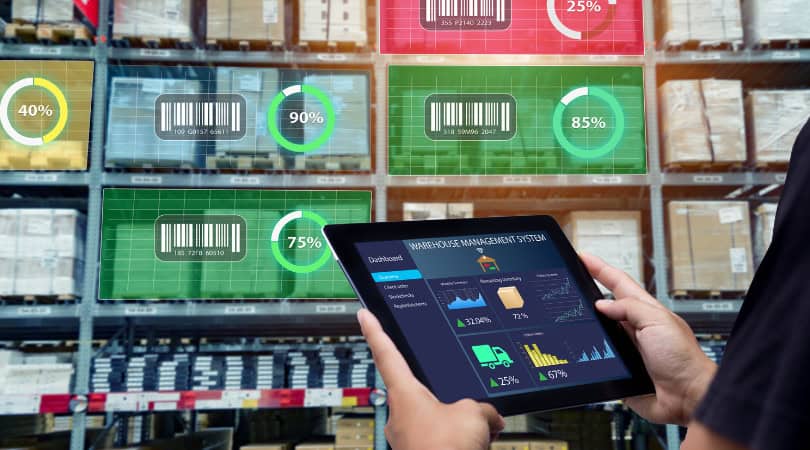
What is Real-Time Inventory Tracking and Why is it Crucial for Today's Businesses?
Why Real-Time Inventory Tracking Matters?

Today’s businesses could lose billions annually due to inaccurate inventory management. A single stockout of a popular item, can cost a business up to 10% in lost sales. Conversely, holding excess inventory ties up valuable resources and reduces profitability. To thrive, businesses need to move beyond manually tracking on spreadsheets and upgrade to real-time inventory tracking software. This widely available solution, powered by cloud-based software, is a game-changer for businesses of all sizes. But why should your business invest in this technology? Let’s explore the compelling reasons:
Real-Time Visibility: Make Informed Decisions Instantly
Having a dashboard that shows you exactly how much stock you have on hand, at any given moment is more important for any management to make decisions quickly. That’s the power of real-time inventory tracking. Kechie’s cloud-based software provides instant updates on your inventory levels, allowing you to:
- Respond to customer demand: Never miss a sale due to stockouts. Real-time data ensures you know when to reorder products, preventing lost sales and frustrated customers. Kechie Inventory Software, for example, provides clear alerts and reorder point functionalities to help you stay ahead of demand.
- Optimize your ordering: Avoid unnecessary inventory holding costs by making data-driven purchasing decisions. Kechie offers insightful reporting that helps you identify slow-moving items and optimize your ordering strategy.
- Improve forecasting: Analyze historical data and real-time trends to accurately predict future demand, ensuring you have the right amount of stock at the right time. Kechie Inventory Software’s forecasting tools empower you to make informed decisions about future inventory needs.
Boost Efficiency and Reduce Errors
Kechie Cloud-based inventory management software can streamline your operations and minimize human error:
- Automated processes: Reduce manual data entry and streamline tasks like order processing, picking and packing, and cycle counts. Kechie Inventory Software automates many of these processes, saving you valuable time and resources.
- Improved accuracy: Real-time data minimizes discrepancies and ensures your inventory records are always up-to-date. Kechie Inventory Software integrates seamlessly with barcode scanners for error-free data entry.
- Enhanced warehouse management: Gain complete visibility into your warehouse operations, identify bottlenecks, and optimize workflows for increased efficiency. Kechie Inventory Software provides features like warehouse layout mapping and bin location management for a more organized and efficient warehouse.
Enhanced Customer Satisfaction: Deliver What You Promise
Customers expect transparency and accuracy when it comes to product availability. Real-time inventory tracking helps you:
- Maintain accurate online inventory: Ensure your online store reflects your actual stock levels, preventing customer frustration from unexpected out-of-stock situations. Kechie Inventory Software integrates with your e-commerce platform to automatically update inventory counts, providing a seamless customer experience.
- Fulfill orders faster: With accurate inventory data, you can fulfill orders more efficiently and get products into customers’ hands faster. Kechie Inventory Software streamlines the picking and packing process, allowing you to fulfill orders quickly and reliably.
- Build trust and loyalty: By consistently delivering on your promises, you build trust and loyalty with your customers, leading to repeat business. When customers know they can rely on you to have the products they need in stock, they’ll be more likely to come back for more.
The Cloud Advantage: Scalability, Security, and Accessibility
Cloud-based inventory management software offers several unique benefits over traditional on-premise solutions:
- Scalability: Cloud solutions seamlessly adapt to your business growth, allowing you to add features and functionality as needed. Kechie Inventory Software offers flexible subscription plans that can grow with your business.
- Security: Cloud providers invest heavily in data security, ensuring your valuable inventory data is safe and protected. Kechie Inventory Software adheres to the strictest industry standards for data security.
- Accessibility: Access your inventory data from anywhere, at any time, on any device with an internet connection. This empowers your team to make informed decisions regardless of location. Kechie Inventory Software’s mobile app provides on-the-go access to your inventory data.
Investing in Your Future: Real-Time Inventory Tracking Pays Off
Here are some of the key metrics that can be positively impacted by real-time inventory tracking software:
- Reduced stockouts
- Lower carrying costs
- Improved order fulfillment times
- Enhanced customer satisfaction
- Increased sales and profitability
Kechie Inventory Management Software stands out as a comprehensive solution for real-time inventory tracking.
Here’s why it should be your go-to choice:
- User-Friendly Interface: The software offers an intuitive interface that makes inventory management easy for everyone on your team.
- Powerful Features: From generating unique SKUs to tracking inventory levels and managing product details, Kechie Inventory Management Software has all the features you need.
- Scalability and Configurable: As your business grows, the software can scale with you, ensuring that your inventory management remains efficient and effective.
- Robust Security: With advanced security measures, your data is always protected.
Connect with us today, to learn more about how Kechie Solution has the tools for all your business needs. Let our expert team guide you through the process and help you discover the transformative potential of Kechie solutions.
What is an Item Number or SKU Number?
What is an Item Number or SKU Number?

If you are a distributor, manufacturer, or even a service provider, you have probably heard of an “Item Number” and “SKU Number”. These unique identifiers play a crucial role in organizing products, tracking inventory, and streamlining business operations. But what exactly are they, and what types of items do they categorize? This blog will delve into the specifics of Item Numbers and SKU Numbers, explaining their significance and the various types of items they can classify. We will also highlight the importance of SKU and Item Numbers for distribution and manufacturing, and how Kechie Inventory Management Software can efficiently manage these for your business.
Item Number or SKU Number, what are they?
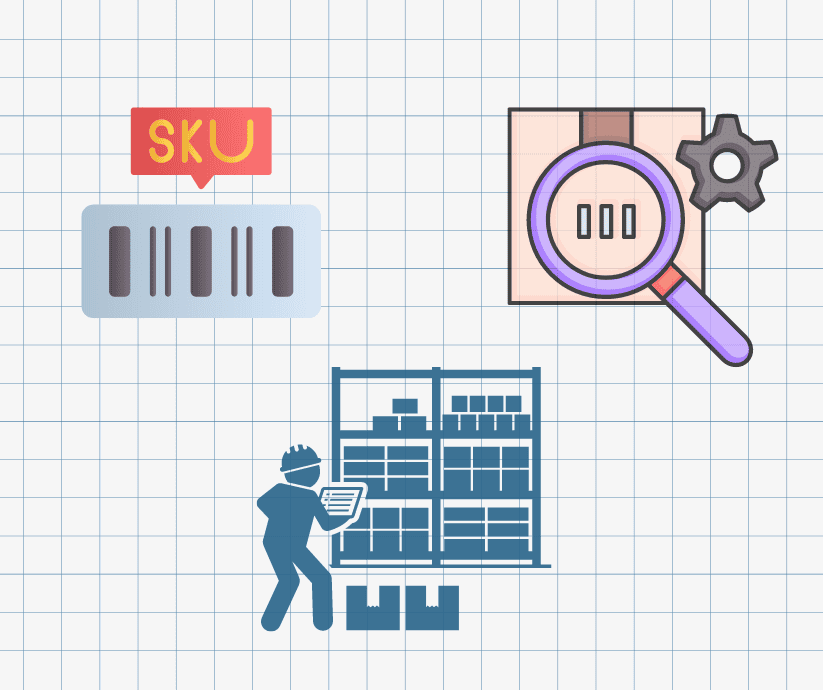
An Item Number, also known as a Stock Keeping Unit (SKU) Number, is a unique identifier assigned to each product in a retailer’s inventory. This alphanumeric code helps businesses track and manage their inventory efficiently. By using SKU Numbers, companies can quickly locate items, track stock levels, and streamline the reordering process.
The Importance of Item Numbers and SKU Numbers
- Inventory Management: Item Numbers help in maintaining accurate inventory levels, preventing overstocking or stockouts.
- Sales Tracking: SKUs allow businesses to monitor sales patterns and identify popular products.
- Efficiency: These identifiers enhance operational efficiency by simplifying the sorting and locating of products.
- Customer Experience: Accurate inventory management leads to better customer satisfaction by ensuring product availability.
Types of Items Classified by SKU Numbers
1. Consumer Goods
Consumer goods encompass a wide range of products, including electronics, clothing, food items, and household goods. Each item in this category has a unique SKU to distinguish it from similar products.
2. Raw Materials
Raw materials used in manufacturing are also assigned SKU Numbers. These can include metals, plastics, fabrics, and other essential materials needed for production.
3. Components and Parts
For businesses dealing with machinery, electronics, or vehicles, components and parts are crucial. Each part, no matter how small, is given an SKU to ensure accurate tracking and inventory management.
4. Finished Goods
Finished goods are products that have completed the manufacturing process and are ready for sale. These items, ranging from furniture to packaged food products, are identified with specific SKUs to streamline sales and inventory control.
5. Services
Although not physical items, services can also be assigned SKU Numbers. For example, in a spa or salon, different services like massages, haircuts, or manicures can have unique SKUs for efficient booking and sales tracking.
6. Digital Products
Digital products such as software, eBooks, and online courses also use SKUs for inventory and sales management. Each digital product is given a unique identifier to simplify the sales process and customer access.
7. Consumable Products
Consumable products, such as cleaning supplies, toiletries, and food and beverage items, are typically used up and replaced regularly. Assigning SKUs to these items helps in tracking usage rates, managing reordering processes, and ensuring consistent availability.
How to Create Effective SKU Numbers
Creating effective SKU Numbers involves a systematic approach to ensure each code is unique and easily identifiable. Here are some tips for creating SKUs:
- Consistency: Use a consistent format across all products.
- Simplicity: Keep SKUs simple and avoid overly complex codes.
- Relevance: Ensure the SKU includes relevant information, such as product type, size, and color.
- Uniqueness: Each SKU should be unique to avoid confusion and errors in inventory management.
Kechie Inventory Management Software
Kechie Inventory Management Software can streamline the creation and management of all SKUs and items. This powerful tool offers an intuitive interface for generating unique SKUs, tracking inventory levels, and managing product details. The addition of barcode capability further boosts efficiency and productivity, allowing for quick and accurate scanning of items reducing manual entry errors, and speeding up the inventory process. By Leveraging Kechie Inventory Management Software with barcode functionality, businesses can enhance their inventory control, improve overall efficiency, and free up valuable resources for other critical tasks.
Conclusion
Item Numbers and SKU Numbers are vital components of efficient inventory management and business operations. By understanding what they are and how to use them effectively, businesses can enhance their organizational processes, improve customer satisfaction, and streamline sales. Whether dealing with consumer goods, raw materials, consumable products, or digital products, assigning the right SKU to each item ensures accurate tracking and management.
Connect with us today, to learn more about how Kechie Solution has the tools for all your business needs. Let our expert team guide you through the process and help you discover the transformative potential of Kechie solutions.

Secure ERP Credit Card Processing Solutions
Two Critical ERP Challenges with Credit Card Processing Systems
In today’s always on world, seamlessly accepting online payments is no longer a differentiator but a basic success requirement for manufacturers, distributors, and service businesses. This means as part of your ERP system you must be able to accept credit card payments from your customers. Credit card sales allow your business to easily increase the size of potential sales, reduce the labor associated with sending out invoices, and improve cash flow.
Accepting a credit card for payment, however, introduces two critical risks to the business – fraud and operational complexity.
At the top of every business owners list should be security. Developing a security strategy is especially important today because of the increasing amount of attempted fraudulent charges. The loss of trust from stolen identity or criminal transactions will have many years of impact beyond a bad transaction.
In order to provide the highest levels of security, credit card payments must be encrypted. In addition, to prevent the possibility that a malicious person gains access to a customer’s account and steals their credit card information, no credit card information should be stored in an ERP system.
How is this done? Instead of storing a customer’s credit card information, the system can use a concept of tokens through a credit card processing company utilizing the PCI (Payment Card Industry) security standard.
These companies create an account for the customer and send your business a token that you store with the customer’s account information in your ERP system. Every time the customer orders, the token is sent to and verified by the credit card processing company. Once the token is verified, the transaction is approved without having to enter or store the credit card information on your site. Follow-on and add-on sales happen just as quickly.
Another risk of accepting credit card payments is operational complexity. Back end ordering, shipping, and accounting systems need to be synchronized with the processing of the payment. Otherwise, manual accounting and auditing practices will be required to match invoice with payments, issue refunds, or answer customer questions. Many businesses have had to implement expensive, complicated programming efforts to interface their business to these credit card processors.
In order to make it easy for you to accept credit cards and not have to worry about possible issues, My Office Apps has established partnerships with two well-respected credit card processing companies. We’ve invested in developing a seamless integration between our cloud-based Kechie ERP software and their credit card processing platforms. This tight integration provides the highest level of security while eliminating operational risk and the need for your business to initiate expensive software development to match payments with orders or manage returns and RMAs.
These two companies are CardConnect and Century Business Solutions. We have incorporated their token system into the Kechie cloud ERP software. Both companies provide highly secure transactions that are compliant with the PCI security standard.
Providing a built-in interface to credit card processing is another example of My Office Apps’ commitment to incorporate innovative features using partnerships and smart algorithms in the Kechie ERP system. Our goal is to provide the best ERP solutions for small and medium sized businesses using the latest techniques in order to help make our clients more efficient and profitable. For more information, you can visit www.myofficeapps.com or better yet, call us at (714) 486-1487 and ask us to schedule a demo so we can show how we can help solve your business issues you face, both today and tomorrow.
About My Office Apps, Inc.
My Office Apps, Inc. (MOA) is a leader in business improvement software solutions to automate your organization. Building on three decades of software design and development, MOA delivers Kechie™, a transformative business tool. Kechie is a fully integrated Enterprise Resource Planning Software as a Service (SaaS) platform with a simplified user experience and the latest in cloud technology. It is quick and easy to implement without the expensive price tag. Sold in separate packages – inventory and warehouse management (CRM, Sales, Procurement, Logistics included), manufacturing, finance – or a fully configured ERP system to include all of these individual tools. Kechie is easily configured to the scalable needs of your growing business. For more information on managing your business processes more efficiently and effectively, visit www.myofficeapps.com.
###


Business Dashboard: 4 Management Tips from Warren Buffett
Business Dashboard: 4 Management Tips from Warren Buffett
The billionaire Berkshire Hathaway CEO has offered some sage advice over the years. Every year, Berkshire Hathaway CEO Warren Buffett writes a letter to the company’s shareholders. Although the letter is mainly about performance of the business, it’s also packed with sage advice from Buffett’s 60-plus-year career. Here are some of his best management tips from the past decade.
1. Base decisions on business needs, not fads.
In his 2014 shareholder letter, Buffett wrote: “That old line, ‘The other guys is doing it, so we must as well,’ spells trouble in any business.”
2. Recognize your employees.
Every shareholder letter from the last decade ends with Buffett thanking his team. “I regularly extol the accomplishments of our operating managers,” he wrote in his 2011 letter. “They are truly All-Stars.”
3. Don’t surround yourself with enablers.
CEO’s keen to close a deal seldom seek dissenting views, Buffett wrote in 2020. “It would be an interesting exercise for a company to hire two ‘expert’ acquisition advisors, one pro and one con, to deliver his or her views on a proposed deal to the board.”
4. Prepare ahead to avoid debt.
“I never will operate Berkshire in a manner that depends on the kindness of strangers,” Buffett wrote in his 2017 letter. “Or even that of friends who may be facing liquidity problems of their own.” Instead, he suggests, build a cash reserve for lean times. Or, as the billionaire calls it, a “cookie jar” fund.
Buffett has employed a laissez-faire or free reign approach to managing his company. It’s a style that allows employees to carry out tasks without much guidance from leaders. Much freedom is given to the employees to make the right decision about what they are going to do. With Kechie™ ERP, management decisions can be swift and powerful with real-time information available at your fingertips. Let us help you make meaningful and prosperous management decisions to grow your business. Visit myofficeapps.com and schedule a demo today.
4 Free Management Tips From Warren Buffett’s Annual Shareholder Letters. (2020, March 4). Retrieved from Management Tips From Warren Buffett’s Annual Shareholder Letters
About My Office Apps, Inc.
My Office Apps, Inc. (MOA) is a leader in business improvement software solutions to automate your organization. Building on three decades of software design and development, MOA delivers Kechie™, a transformative business tool. Kechie is a fully integrated Enterprise Resource Planning Software as a Service (SaaS) platform with a simplified user experience and the latest in cloud technology. It is quick and easy to implement without the expensive price tag. Sold in separate packages – inventory and warehouse management (CRM, Sales, Procurement, Logistics included), manufacturing, finance – or a fully configured ERP system to include all of these individual tools. Kechie is easily configured to the scalable needs of your growing business. For more information on managing your business processes more efficiently and effectively, visit www.myofficeapps.com.
###

What is Vendor Managed Inventory? How to Make VMI Work
What is Vendor Managed Inventory? How to Make VMI Work
Looking to streamline your supply chain and reduce inventory costs? You might want to look into Vendor-Managed Inventory (VMI). A VMI software might be the solution – as long as you know the best practices to make it work. So, what is VMI, and what is the impact on your business?
Vendor Managed Inventory is a business arrangement where the vendor of a product takes responsibility for making sure the buyer has the agreed inventory. The supplier or vendor ensures the stock is replenished automatically without the buyer’s initiation. If done right, VMI is a win-win situation for both the vendor and the customer.
What benefits can VMI bring to your business?
- VMI helps cut operating costs – With the supplier handling the quantity and frequency of orders, you can reduce costs associated with personnel and space.
- Lean inventory levels – VMI allows your vendors to supply in-demand goods at the right time. This also removes the need for safety stock.
- Improved Efficiency – The speed of stock replenishment is improved, and the risk of running out of stock is reduced. This improved service trickles down to the end-users.
What are the benefits of VMI for the Manufacturer/Supplier?
- Forecasting is easier courtesy of access to the buyer’s Point of Sale data.
- An optimized VMI program ensures you supply what is needed, and at the right time. Visibility to inventory levels helps the manufacturer ascertain the need for a product before it’s ordered.
- Produces a predictable and steady flow of income while mitigating the risk of losing the customer to a competitor.
- VMI reduces ordering errors and helps the supplier schedule operations productively
- A VMI program facilitates a stronger Customer-Supplier relationship. Both parties must work closely together to ensure seamless inventory management activities.
Cons of VMI
Regardless of the benefits highlighted above, enforcing a VMI program has a few drawbacks that business owners should keep in mind. One of the main disadvantages of VMI is its impact on sourcing. It’s difficult for supply chain managers to consider re-sourcing when the current VMI program is well-run. Some managers might be compelled to compromise supplier-related issues such as higher prices due to over-reliance on a vendor.
Granting non-employees full access to your inventory data is a significant risk. Leaving your stocking needs to the mercy of a 3rd party makes your business vulnerable to errors by the supplier, and even sabotage from competitors.
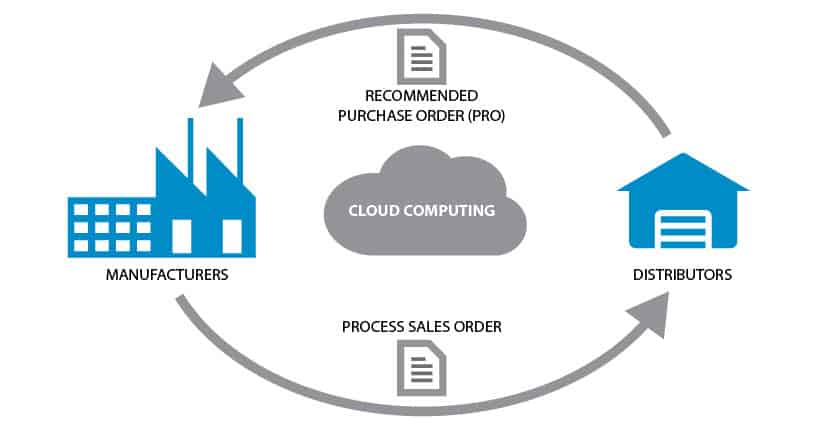
3 Steps to a Successful VMI Program
- Clarify expectations – and make them realistic: How will the system impact the supplier and the company? Both parties should be engaged in honest discussions to ensure everyone understands the risks and returns of the arrangement.
- Share information seamlessly: The success of a VMI program rests on the quality of information shared between the two parties. The supplier/manufacturer must have full visibility into the inventory levels to ensure a steady flow of goods.
- Clear and open communication: Constant and open communication is vital to the sustainability of the VMI business model. This includes discussing goals and progress towards achieving them. Each side must prevent a breakdown in communication, especially when miscues arise.
To make the best of vendor managed inventory, it's important to utilize a complete inventory management solution to carry out all of the necessary steps on your behalf. Without insights into your inventory, it's difficult to have automatic replenishment of vendor-managed inventory and timely invoicing. That's why it's important to utilize an inventory management solution like Kechie software, which allows you to set up, and streamline your VMI, to maintain automated operations between the vendor and all of the tracked inventory.
